

There is a moment in a traditional inn when a visitor cannot find the wall. The room seems to end at a faint wooden grid covered in paper, and the next room begins somewhere behind it. Then someone slides the whole panel away and the two rooms become one.
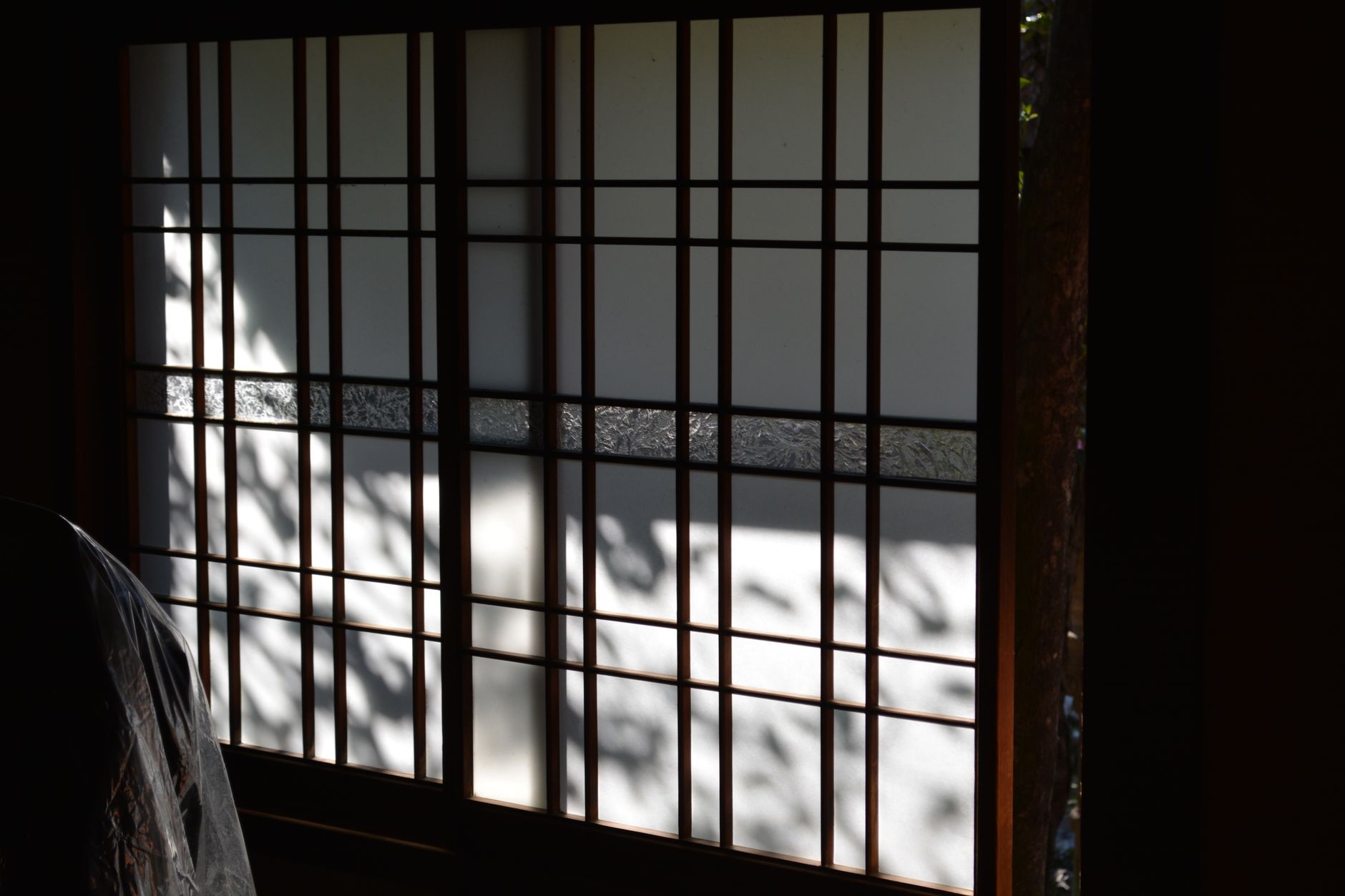
Shoji vs Fusuma: The Two Panels Everyone Mixes Up
Shoji (障子) is a wooden lattice covered with washi paper. It is not a curtain and not a solid wall. Light passes through the paper, so the room stays bright without being exposed. Shoji is the screen you see in photos of traditional rooms, the one that glows in the evening.
Fusuma (襖) is the solid one. It is usually a wooden frame covered with opaque cloth or paper, often painted. It blocks the view, not the light. Fusuma is what slides across to close off a room or a closet.
The two names get swapped because both panels slide in the same wooden tracks and neither word is obvious to an English speaker. The difference is simple: shoji lets light through, fusuma blocks it. Once that detail registers, the mix-up stops.
What You Actually See in a Traditional Room
In older houses and inns, a room often has a shoji screen on the outside wall, facing the veranda or the garden. During the day it softens the daylight and keeps the room from feeling exposed. At night, a light behind it makes the whole panel glow.
Inside the house, fusuma panels run between rooms. They can close a room for privacy or slide back to join two small rooms into one large one. A room that looks small at first can double in size when the fusuma opens.
The panel is not a fixed wall. It sits in a groove in the floor and the ceiling beam. In many older buildings, a person can lift a panel out and carry it to a closet. The wall is furniture that can be put away.
Why the Wall Between Rooms Is Optional
In the houses I knew growing up, most rooms had one fixed hinged door. It swung on hinges and stayed put. The door’s job was to close the room off. A wall was a fact of the house, and no one moved it.
In a traditional room with shoji and fusuma, a partition is a boundary you can move. The goal is flexibility. A host can open two or three rooms into one space for a family gathering, then close them again at night. The house does not commit to a layout the way the houses back home did.
That flexibility changes how people use space. A room is not defined by its door. It is defined by how many panels are closed and how many are stored. That is why a visitor can feel the room has no walls. The walls are just not there right now.
The Sound Trade-Off
Shoji and fusuma do not seal a room the way a solid hinged door does. Light and sound leak around the edges and through the paper. In an older house, a conversation in the next room is not exactly private.
That is part of why modern homes moved toward hinged doors for bedrooms. A sliding panel is great for opening space and terrible for blocking noise. People accept that trade in a ryokan or an old house, but not always in a new apartment.
This is also why a visitor can feel oddly exposed. The room looks closed, but it does not sound closed. That feeling fades once you learn which sounds matter and which do not. The panel closes a space, but it never blocks the way a solid door does.
The Third Panel That Gets Dragged In
Amido (網戸) is the insect screen. It is not a partition between rooms. It is a lightweight mesh panel that fits into a track on an outer window or doorway. Its only job is to let air through and keep mosquitoes out.
People sometimes call an amido a shoji because both fit in sliding tracks and both let some light through. But amido has no paper and no solid panel. It is a screen, not a wall. The three things look similar from across a room but do different jobs.
Why Shoji Paper Costs More Than People Expect
Shoji paper is not the thin paper you might imagine. It is washi, a strong paper made to stay taut across a wooden frame. When a panel gets damaged, the whole sheet often needs replacing, not just patching.
The work is skilled. A new sheet has to be cut, glued, and stretched evenly, or it sags. That is why replacements cost more than the simple frame suggests. Many people assume paper means cheap, and then they see the bill.
High maintenance is a real factor. Pets, children, and careless elbows can tear a sheet. Because shoji needs more care than a glass door, a lot of modern apartments and houses around me switched to plastic or synthetic panels that look similar but take less effort.
The Exceptions Nobody Mentions
Sliding panels are not everywhere. Many modern apartments and houses around me have ordinary hinged doors, especially for bedrooms and bathrooms. Shoji and fusuma are far more common in older homes, ryokan, and temple guest rooms than in a typical city flat.
In a newer apartment, the bathroom door might swing like any door back home. The kitchen might have a sliding door, but it is usually a frosted glass panel, not washi paper. The traditional setup is one option, not the standard everywhere.
Even where shoji exists, it is often decorative. A room might have a shoji screen in front of a window, but the actual insulation and soundproofing come from a modern glass window behind it. The paper screen is the traditional layer, not the whole wall.
Frequently Asked Questions
What is the difference between shoji and fusuma?
Shoji is a paper screen that lets light through. Fusuma is an opaque panel that blocks the view. Both slide in the same wooden tracks, which is why people mix them up. The difference comes down to whether light passes through.
Why do traditional Japanese houses use sliding panels instead of regular doors?
Sliding panels save floor space and let a room change size. Two small rooms become one large room when the fusuma slides open. The panels can also be lifted out and stored, so the wall is optional. That flexibility is the whole idea.
Why are shoji screens so expensive to repair?
The paper is washi, a strong but delicate material. Replacing it means cutting, gluing, and stretching a new sheet by hand. The labor costs more than the simple wooden frame suggests. That is why repairs surprise people.
Is an amido the same as a shoji?
No. Amido is a mesh insect screen that fits on an outer window or doorway. Shoji is a paper partition that softens light. They share a sliding track but serve different purposes. One keeps bugs out, the other keeps a room bright.