
What I Thought Was Missing
The first time I stayed at a traditional inn, I thought the room was missing a wall. I’d come across the shoji vs fusuma question before, usually in photos, and it hadn’t stuck. Then I leaned against a panel by accident, and the whole side of the room slid away. It wasn’t a missing wall. It was a wall that could leave.
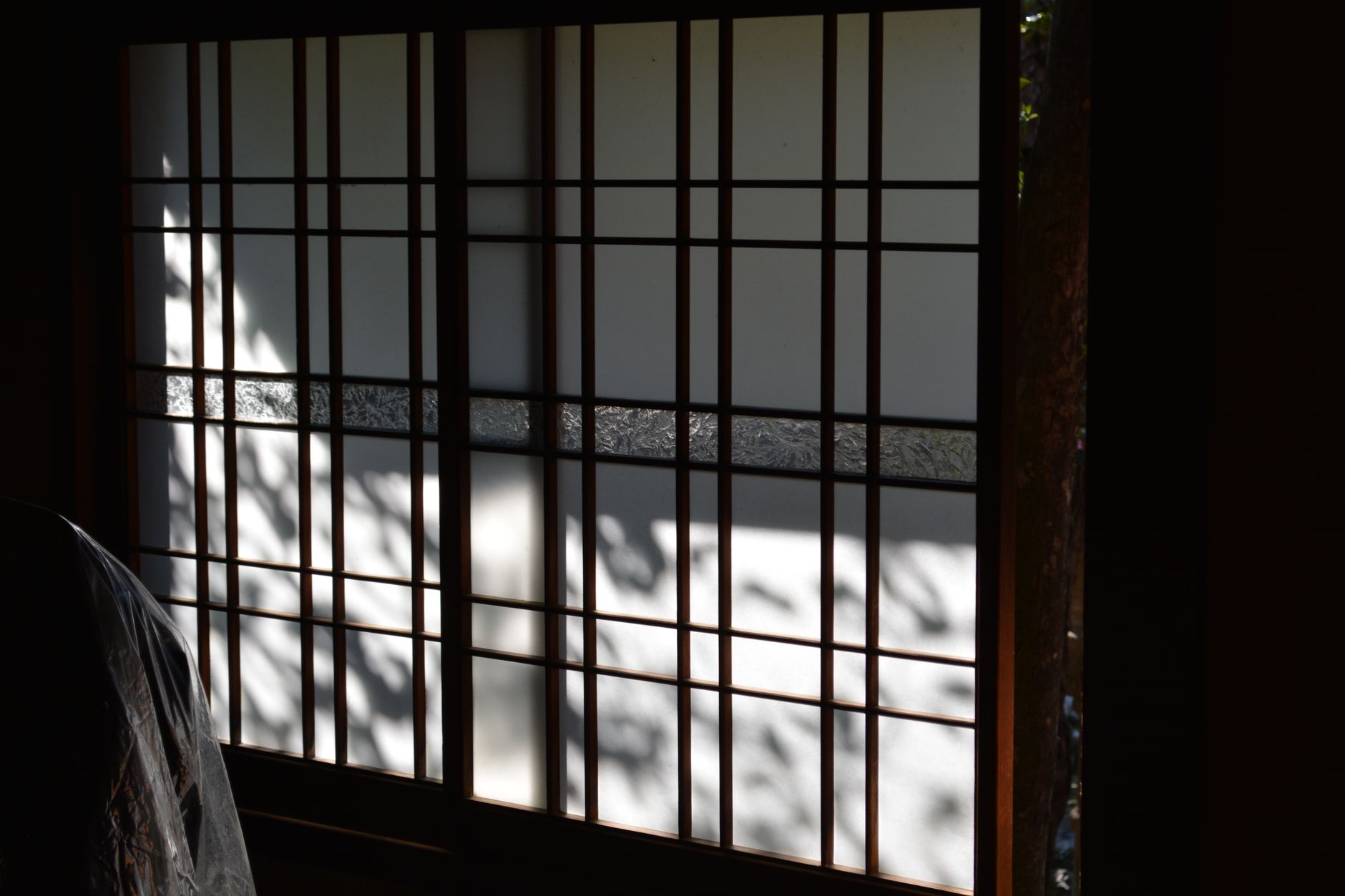
I didn’t know the panel’s name. I only knew the room had changed shape in one motion. That was the first real lesson about shoji and fusuma.
Shoji and Fusuma, Side by Side
A shoji (障子) is a sliding panel made of a wooden lattice covered with paper. Light passes through the paper. You don’t see through it, but the room glows. A fusuma (襖) is a solid sliding panel, often covered with cloth or paper. It blocks the view completely.
Both slide in the same wooden tracks. Both are roughly the size of a door and can be lifted out. The difference is simple: the paper one lets light through, and the solid one keeps a room separate.
If you’ve seen both panels in photos of an ordinary Japanese home, the mix-up makes sense. They look similar until you understand the paper.
Why Slide and Lift Away?
In older houses, the room’s size is meant to change. Two smaller rooms can become one large room. Someone slides a row of panels into a recess along one side. The wall between rooms is optional.
The panels sit in grooves. A thin track runs along the floor, and another runs along the header. You lift a panel slightly to pop the bottom out of the track, then it comes free. You can carry it to a storage closet and come back for the next one.
This is the opposite of the American room I grew up with. A hinged door swings open and stays where it is. It marks a fixed room and a fixed wall. A sliding panel disappears into the frame, and the wall itself can leave. You cannot put a hinged door in a closet when you want a bigger room.
The room’s boundaries are temporary. I’ve watched a small room turn into a much larger one when someone removed a whole wall of panels. The wall was never really a wall. It was a partition you could park.
Living With a Wall That Moves
In my apartment, ordinary hinged doors are everywhere. The front door, the bathroom door, the balcony door all swing. Sliding panels are far more common in older houses and traditional inns than in a standard rented apartment.
Past the genkan, a traditional room is often a series of spaces that can be opened up. At an inn, the staff might slide three or four panels away. The bedroom and the sitting area become one room.
That is why a visitor can feel the room has no walls. The walls are there, but they are parked. You can move them. If a room has four sliding sides, you could open every one. You would be left with a wide open space.
The Third Panel Nobody Names
There’s another panel that gets lumped in with shoji and fusuma. It is the insect screen, called amido (網戸). It slides in the same frame, and it sits on the outside track. But it is a mesh panel, not paper or cloth.
The amido keeps mosquitoes out and lets air through. It is neither a paper screen nor a solid partition. In warm months, it does the job a screen door does in the Midwest, but it slides instead of swinging.
On my balcony, there’s an amido, and it gets more use than the glass door. I slide the glass open and leave the mesh closed. The apartment airs out without inviting every bug in the neighborhood.
What Paper Does to Light
The unexpected part is what paper does to light. A shoji doesn’t just block a view. It catches the sun and turns it into a soft, even glow inside the room. A bare window gives harsh sunlight. A paper panel changes the quality of the light.
In winter, the low sun through a shoji is enough to read by. The paper spreads the light around instead of throwing a bright patch on the floor. That’s why a room with no window on one side can still feel bright.
Why Paper Costs More Than You Expect
Paper seems cheap, so the price of a good shoji surprises people. The paper gets torn, stained, and yellowed. In older homes I’ve seen panels where one square had been patched, then another. Keeping them clean is ongoing work.
The frames are usually wood, and replacing the paper properly is a skill. Many homes I’ve seen now use glass or synthetic panels. They need less upkeep. That switch doesn’t carry the same soft light, but it is easier to live with.
A cheap hollow-core door back home might cost less than a single well-made shoji. The shoji also needs fresh paper after a few years. I’ve seen plenty of homes switch to glass or synthetic panels. The paper is the part that wears out first.
When You Won’t Find Them
Sliding panels are not everywhere. In my apartment, I have exactly one sliding closet door, and it’s cheap and flimsy. The full set of paper and cloth panels is mostly a thing in older houses and rural inns. Most people I know here live with ordinary doors.
The entryway is part of the same older-home logic, and the sliding panels are its most visible version. Both show up in houses built a certain way. You notice them more in the older ones.
In some older Kyoto houses, shoji still covers windows. In newer places, you often get a frosted glass sliding door that looks similar. It slides the same way, but it is glass, not paper. The idea hangs on, but the material changed.
A Different Idea of a Wall
An American room with a hinged door says the room is finished. The shape is fixed. A Japanese room with sliding panels says the opposite. The room can be two rooms, or one large room, or a room with a wall missing. Nobody thinks about it. The panel slides back into its track.
The next time you see a photo of a glowing paper wall, you’ll know which panel it is. And if you see a solid one with a painted scene, that’s the other one. One lets the light in. The other keeps the room to itself.