
The first thing I learned about laundry in Osaka wasn’t about separating colors. It was that a sunny morning works like a clock. Hang a load by early afternoon, or the towels are still damp when I want the rack back. For a long time I had no good answer to the question: why do Japanese homes not use dryers? The balcony does the work instead.
The Balcony Is the Drying Rack
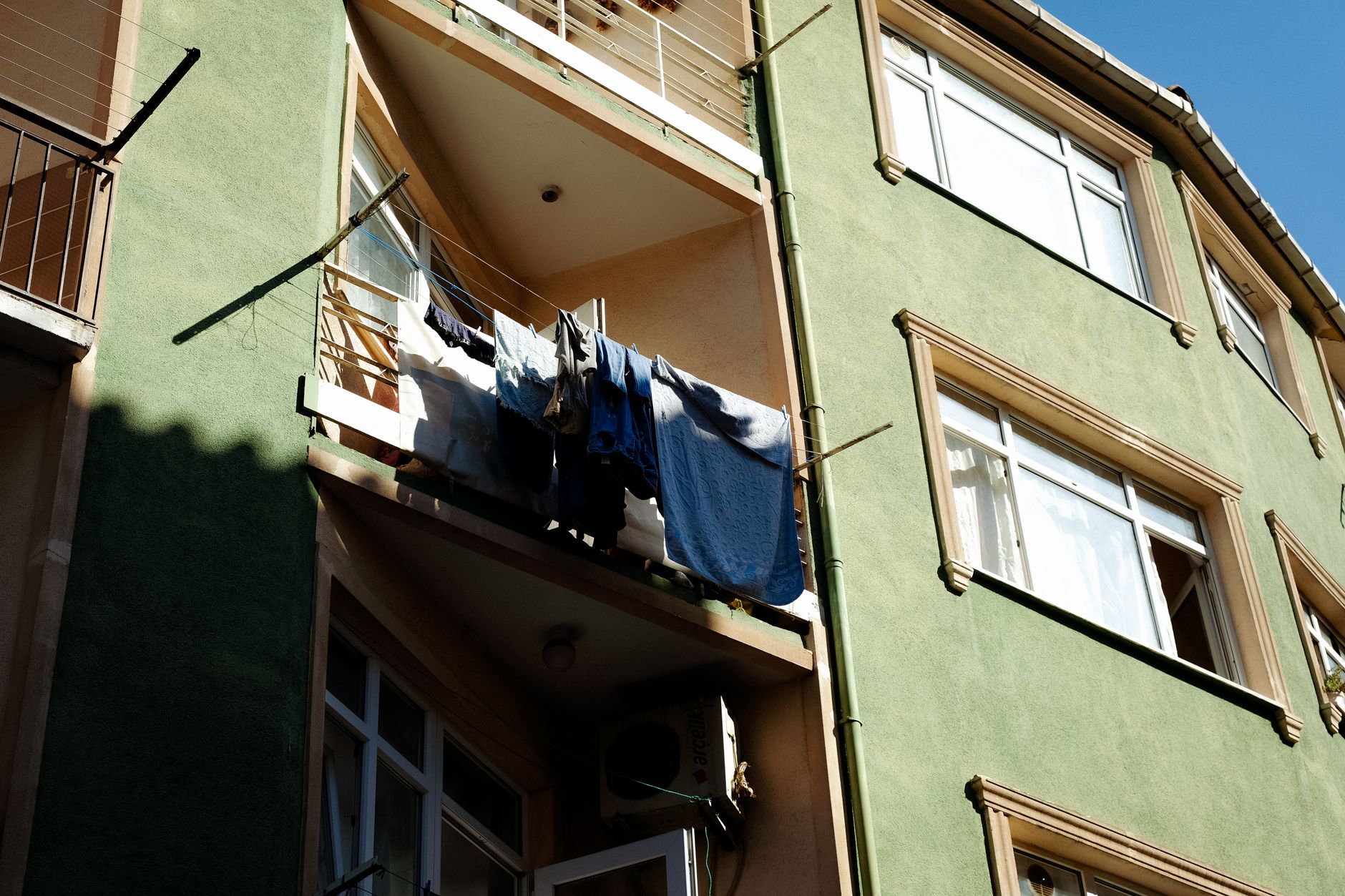
Walk through most residential streets around here and the balconies tell you what day it is. Poles and racks lean out, and laundry hangs in neat rows. It is as routine as knowing which day the burnable trash goes out. I stopped noticing the laundry after a few months, until a friend from back home asked why nobody uses a dryer.
Part of the answer is space. In many apartments, the washing machine does not sit in a dedicated laundry room. It is tucked into a small alcove, a closet, or sometimes out on the balcony itself. That placement leaves little room for a second full-size machine beside it.
The balcony becomes the second half of the washing machine. You wash indoors and dry outdoors. It is less a preference and more a layout. The same balcony that holds the air conditioner unit and a few plants also has a pole bolted permanently in place.
Summer and winter are different machines. In dry, clear weather, the balcony can finish a load before lunch. During the humid rainy season, the same shirts might hang for two days and still feel cool. That is when the bathroom backup stops being a backup and becomes the main event.
Why the Dryer Never Took Over the Apartment
Dryers exist here. The Japan laundry appliances market was worth about USD 3.54 billion in 2026, and forecasts have it growing slowly to around USD 3.92 billion by 2031. So the machines are not absent. They just occupy a different place in the routine.
The market number includes more than the big drum I grew up with. Some machines are compact, and some combine washing and drying in one unit. A separate dryer here is often not the same appliance an American basement expects. That makes the comparison less about presence and more about shape.
In many homes I know, a standalone dryer is not the default next to the washer. There often isn’t a clear spot for it. The water hookup and drain are in one small alcove, and the machine fits just barely. Adding a dryer would mean choosing between it and somewhere to stand.
Then there is the balcony itself. For a lot of the year, the weather does the drying for free. A sunny day becomes a drying day. A rainy one becomes a problem to work around, but that does not push people toward a large machine as automatically as I expected.
The Bathroom That Dries Your Clothes
Here was the part I didn’t expect. Many modern apartments solve rainy-day drying by turning the bathroom into a machine. The system is called yokushitsu kansōki (浴室乾燥機), and in newer buildings it is surprisingly common. The bathroom itself does the job a dryer would do.
You hang clothes from a bar inside the shower area, press a button, and a ceiling unit circulates warm air. It dries and deodorizes the laundry while it hangs there. Some systems also heat the bathroom in winter, pull out humidity, or cool the space in summer. The room, not a separate appliance, becomes the dryer.
That design choice changes the whole equation. If the bathroom already dries clothes on wet days and the balcony handles the rest, a big standalone dryer starts to feel like a third option rather than a necessity. That is not a rule for every home, but it explains the setup I keep seeing.
I first saw one in a coworker’s apartment and assumed it was a bathroom heater. She pressed a button and pointed to the bar above the tub. The fan started, and the room filled with warm air. It was the first time I understood why the bathroom door was closed.
What a Drying Day Actually Looks Like
On a clear morning, the routine is fast. The load goes in before work. By mid-morning, I carry the basket to the balcony and hang shirts on hangers, socks on clips, and sheets over the long pole. The sun does most of the work, and by late afternoon things come down dry and slightly warm.
The whole thing fits into the same household rhythm as garbage day in an Osaka apartment. It is a fixed point in the week rather than a decision. Clothes come out, clothes go up, and the schedule handles the rest.
Rain changes everything. The rack moves inside, or the clothes go into the bathroom to use that drying system if the apartment has one. Some days I simply wait, the way you wait for the right garbage collection day. A load might sit in the washer until the forecast clears. That would have driven me crazy in my first year. Now it is just part of the schedule.
The American Comparison
Where I grew up, a dryer sat next to the washer in the basement or a utility room. Running a load meant both machines in sequence, and line-drying was a choice, not a default. Here, for many households around me, the balcony is the default and a dryer is something you might add later, if the space exists.
That difference is less about preference and more about what the home gives you. Apartments are smaller, balconies are built for exactly this job, and the bathroom can cover wet days. The same calendar that sets garbage day in an Osaka apartment also shapes when laundry gets done.
The pole on my balcony has a slight bend from too many wet sheets. I don’t notice it anymore, except when a friend asks why the laundry is outside.
References
- Yuki Homes, “Why Is North America the Only Place…” — details on balcony laundry racks, washing machine placement in alcoves and closets, and bathroom drying systems.
- Research and Markets, “Japan Laundry Appliances Market…” — 2026 market size and 2031 forecast figures.