
First, the Marks on the Ground
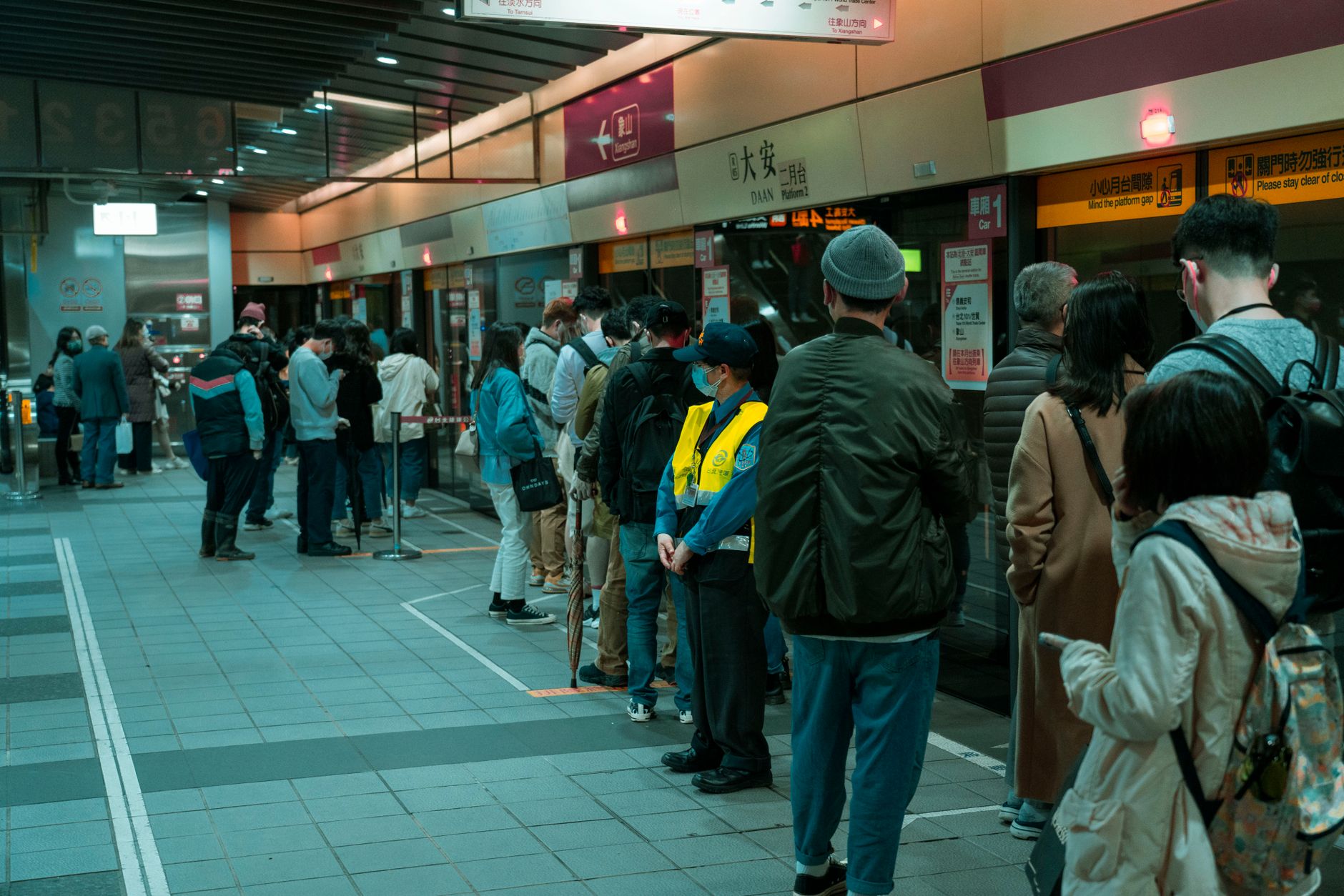
The first thing I noticed at Umeda wasn’t the crowd. It was the white lines painted on the platform. They run parallel to the tracks, then curve into small waiting boxes near each door. On the platforms I use, Japanese queuing starts with paint. People stand inside the boxes without being told.
In Japanese, the verb narabu (並ぶ) means to line up or queue. The noun retsu (列) is the line itself. I learned the verb before I learned to read the floor marking, and the floor marking does more work than the word does.
I didn’t learn the floor system from a manual. I learned it by standing in the wrong spot. The yellow tactile strip near the edge is for people with visual impairments. The white box is for boarding. The two are not the same thing, and it took me a few rides to notice.
The Lines on the Floor Do Half the Work
On the station platforms I use around Osaka, the queue is usually painted before the train arrives. Yellow or white lines mark where to wait. Small arrows point toward the door position. A pair of marks often sits back from the edge, well clear of where the doors will swing open.
Those markings change by station, and sometimes by day. At a central loop-line stop, the marks are fresh and precise. At a smaller suburban platform, a single strip of tape does the job. The rule is the same, but nobody is walking around enforcing it.
Here is the part I didn’t expect. The markings are not especially graceful. They look like road paint, and people treat them like road paint. You stand behind the mark, and that is enough.
How the Queue Forms When a Train Pulls In
A station queue is not a single line. It looks more like several small pockets of people, one at each set of door marks. When the train arrives, those pockets become two short lines on either side of the doors. The center stays open for people getting off.
This is not something anyone announces. The doors open, everyone waits a beat, and people step off into the open path. Then the two lines move inward and board. It happens fast, but it never looks rushed.
What surprised me most was how little talking this takes. There is no organizer, no clipboard, no pointed instruction. The train arrives, and the marked pockets do the organizing. The queue is not a social performance. It’s a piece of infrastructure that people follow because it is there.
My first commute, I did what I knew from Chicago. I stood at the edge and waited for the doors. People arranged themselves behind me without a word. The train arrived, and I stepped back just in time.
Not Every Queue Looks the Same
I assumed all queueing behavior would look alike. It doesn’t. The setting changes the shape, and once I had seen the differences, I stopped applying one rule to all of them.
The Station Platform
On the trains I ride, the printed marks manage the flow. People stand behind them and wait. The line is already there before the train is. When I first arrived, I walked right up to the yellow line and stood in front of the door marks. Nobody corrected me. The marks did.
The Konbini Checkout
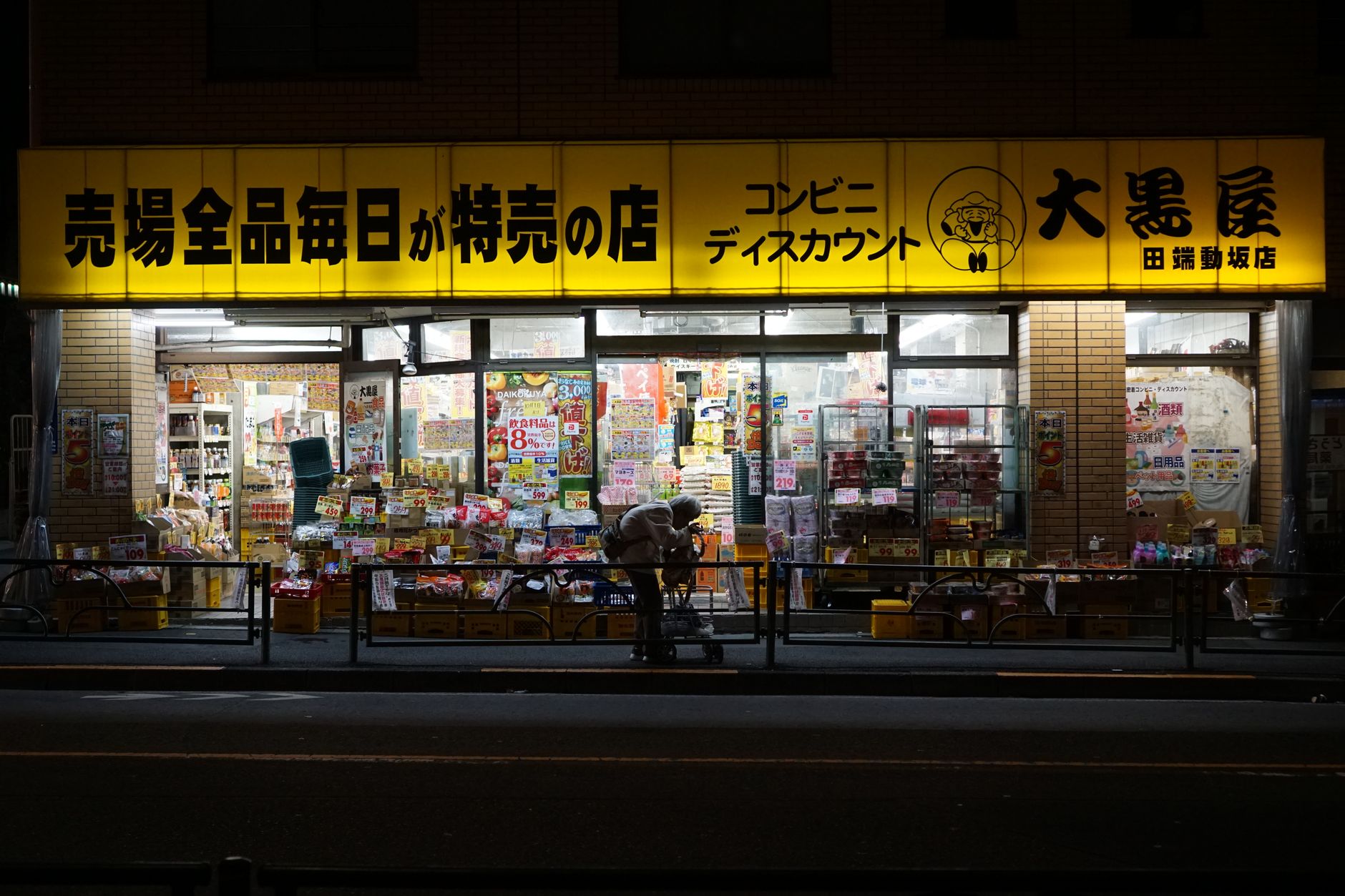
At a convenience store, konbini (コンビニ), the line is a single queue. It feeds whichever register opens next. This is a real contrast with many American stores, where each register gets its own line and you bet on which one will move faster. In a konbini, there is one line, and it moves fast.
The Ticket Office
At a larger ticket office around Kansai, the queue can be a switchback behind ropes and posts. A staff member stands near the front and points to the next open window. The line moves one person at a time. It is quieter than the konbini line, but the same idea holds.
The Bus Stop
Bus stops are different again. There is often no printed line at all. People cluster near the sign or the shelter. Then, when the bus appears, the cluster turns into a line in about five seconds. The queue doesn’t exist until the bus does.
Why It Works Without Much Talking
What actually happens is often closer to standing where the environment says to stand. The marks, the arrows, and the door positions do the work that explicit signage would do elsewhere. Nobody has to explain the rule because the floor already has.
This is a lot like the genkan rule. Leaving shoes at the door is not a rule you are told. The entryway itself tells you. Platform markings work the same way. The line is not a moral test; it’s a piece of pedestrian engineering.
When I first thought about bowing, I noticed the same pattern. A bow does the talking so you don’t have to. A queue at a station does the same. It absorbs the small decisions and leaves you with the one simple choice of standing behind the mark.
None of this depends on a national personality. It depends on clear physical design and many repeated small choices. When the marks are absent, people do not magically form perfect lines. They stand near the obvious place and wait. That, to me, is more interesting than any legend about Japanese politeness.
A Less Romantic Explanation
The queue in Japan gets a lot of praise as a sign of patience. I understand why. It photographs well. But after watching it for a while, I think that praise misses the more useful point. The line works because the physical space does the telling.
Wherever there is a printed box or a clear door position, people step into it. Where there is none, people cluster. The queue follows the architecture. It doesn’t flow out of some deeper trait. This is why tourist sites and old stations can look less orderly. The environment there is less specific.
That also means the line is learnable. I didn’t have to absorb some mysterious social code. I just had to read the floor. Once I did, the station made sense in about three days. The calmness I had attributed to culture was mostly good signage and enough space to use it.
When the Line Breaks Down
The line is not sacred. At a crowded festival or a packed station exit, it dissolves into the same jostle you would see anywhere. People still avoid bumping into each other more than I expected, but the neat two-line pattern is gone.
Even in ordinary settings, there are exceptions. At a bus stop in the rain, the line might form under the shelter and then collapse at the door. At a ticket machine, people sometimes hover a half-step back instead of forming a clear queue. It is not a system run by robots.
Frequently Asked Questions
Is queueing in Japan always extremely orderly?
No, not always. On well-marked station platforms and in many stores, the line is very orderly. In crowded, unmarked areas, it looks more like a loose knot of people. The order usually comes from the design, not from an invisible rule everyone carries.
Why do people line up before the train arrives?
On many platforms, the door positions are marked. People stand behind those marks so the path stays clear for arriving passengers. It also makes boarding faster, because everyone already knows where the doors will open. When I first saw it, I thought it was patience. It was mostly layout.
Do people say anything to hold a place in line?
In my experience, no. Nodding or a small gesture might happen, but nobody calls out “I’m next.” The line itself holds the place. If I step away for a second, I usually just return to the same spot and wait.