
The first time I sorted trash into four bags in my Osaka kitchen, I was sure I’d done something wrong. I hadn’t. I had just met the Japanese home routine, and it starts with the trash.
The Kitchen Bin, Four Ways
Waste is the first part of the routine a newcomer notices. It refuses to stay simple. A normal day in my ward can produce four kinds: burnable, plastic packaging, cans and bottles, and nonburnable. Each has its own bag. Each has its own pickup day.
The rules come from the local collection system, not from one national standard. My ward sets the categories and the days. A neighboring ward can differ. That part surprised me.
I have a whole separate article on how garbage sorting works. The short version is that the bags are not just labeled. You follow a printed calendar for your building or block. Put the wrong thing in the wrong bag, and it may be left behind. Put it out on the wrong morning, and it stays there.
There is a small yellow sticker sometimes. If a bag is rejected, it doesn’t disappear. It sits at the pickup point with a notice no one wants to be seen with. The rejection is quiet and public at the same time. You correct it, or you live with it until the next collection.
A collection morning in my building is fast. A blue net or a foldable cage appears before seven. People add bags on the way out. By late morning the pile is gone, replaced by the empty net. I have another piece on what a garbage day looks like, because the routine has its own rhythm.
Burnable is kitchen scraps and paper. Plastic packaging is wrappers and trays. Cans and bottles get rinsed. Nonburnable is small metal and broken ceramics. The line between plastic and burnable is the one I still pause on.
I got the rubbish days wrong for a year. The notice was on the board the whole time. It listed the split and the mornings. I just never thought to stand still and read it. Once I did, the system stopped looking arbitrary. It was local, not mysterious.
There is no single national rule for any of this. Waste collection is a municipal service. Each city or ward runs its own trucks and its own schedule. I have never traced the exact history. The local nature of the service is plain from the start.
Laundry Belongs to the Balcony
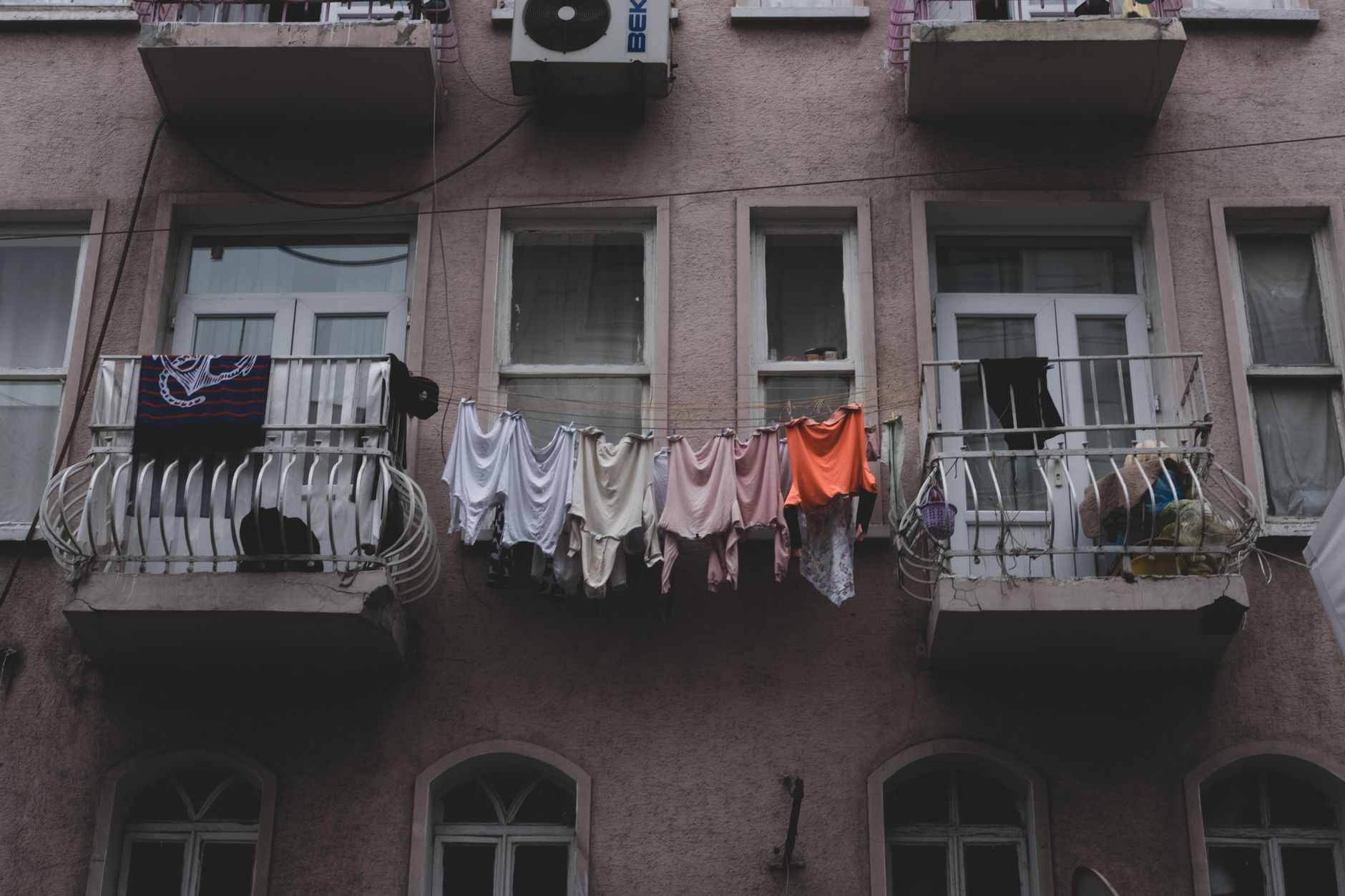
Almost every apartment I have lived in here came with a washing machine but not a dryer. The balcony railing had the real job. You hang clothes outside in the morning and bring them in before evening. It is not a fallback. It is the default.
I have never found one tidy origin for the outdoor-drying habit. The answers I hear are practical. It saves electricity. The sun does the work. The balcony is already right there. I suspect the small interiors make a dryer feel optional. That’s my read, not a sourced fact.
Futons and bedding follow the same outside path. Thick quilts hang over balcony rails, half in the sun. It looks odd the first time. Then you do it. Air and light become part of the laundry system, not an afterthought.
Rain changes the whole plan. Clothes move to an indoor rack near the window. Some days they dry slowly. On clear days, the balcony works faster than any machine I’ve used. The weather is part of the chore, not a separate forecast.
Where I grew up, a dryer was the normal end of laundry. Hanging clothes outside was something people did with sheets, maybe on a summer afternoon. Here, the line and the clips are the first thing you reach for. That shift is small, but it changes how a home feels.
A balcony here is not decorative. It is the dryer, the airing rack, and sometimes the only private outdoor space. Mine holds a pole and a row of clips. It takes me a few minutes to fill it. The apartment is small, but the line outside stretches.
The rainy season is the exception. Clothes move inside and take a full day or more. The apartment smells faintly of fabric softener. I learned to do laundry on clear days, not because anyone told me, but because wet clothes are heavy.
The Weekly Cleaning Pass
Shoes come off at the door. That one habit changes what cleaning means inside. You are not tracking in the street. The floor stays cleaner longer. Most of the dirt is dust, hair, and the occasional crumb, not mud.
In my apartment, cleaning is short and frequent. A quick sweep, a wipe of the kitchen, a pass over the bath. Nothing feels like a deep clean because the small spaces never get a chance to build up. That might be the real difference. The routine is light, but it doesn’t skip days.
The bath is a good example. People rinse it down after use. The room is meant to get wet. You clean it in minutes, not hours. That differs from a bathroom at home, where the floor stays dry.
Futons get aired more often than washed. The same balcony rail holds them in the sun. It is part of the cleaning pass. A room airs while the bedding is out. Then everything goes back before evening.
I keep a small broom and a damp cloth. The floor is hard, not carpet. Dirt shows up immediately. A quick pass takes less time than finding the vacuum. This is not a deep clean. It is maintenance, done often.
The broom is short. You hold it low. The dust cloth gets used on floors and shelves. The bath has a small squeegee. These tools feel less like equipment and more like things that live in the corner.
Where I grew up, cleaning was a weekend event. You blocked off a Saturday morning and worked through every room. Here, the same work is spread across the week. The apartment is smaller. The mess never gets big enough to need a full day.
What Ties It Together
The routines look separate, but they lean on the same few fixtures. A balcony, a sun-facing window, a small entryway. The walls are close. The storage is tight. So the home uses air and light the way a bigger house uses machines.
That does not mean there is one philosophy behind all of it. I have lived here long enough to think the practical reasons came first. Space is expensive. Sunlight is free. Habits stick when they solve a daily problem. But I wouldn’t state that as a studied conclusion. It’s just how it feels from inside one apartment.
The same balcony does several jobs. It dries the laundry. It airs the futons. It holds a few plants and a dusty bike. That overlap is common here. A small home asks every surface to earn its place.
The entryway works the same way. Shoes stop there. Packages wait there. The indoor floor stays cleaner because the outside stays outside. That one step is half the cleaning system. It does not need a rule to make sense.
Garbage, laundry, and cleaning all return to two small tasks. Put things in the right place. Let the apartment air. Even when the bins get complicated, the rest of the routine is light.
Where Things Vary
None of this is uniform. Garbage categories change from one ward to the next. My building has no dryer, but newer places sometimes do. Cleaning products on the shelf go by brand and scent, not by a single national standard. Even the airing habits shift with the size of the balcony.
That variation is worth saying plainly. Outsiders tend to flatten Japan into one household routine. It isn’t. A central Tokyo tower and a rural house in Tohoku solve the same chores differently. Where I live, the routine is a mid-rise Osaka version. It is not the whole country.
Some newer apartments have a small dryer tucked into the unit bath. A friend in a recent building showed me his. It dried a single load in under an hour. The rest of us still use the rail.
Common Questions
Do Japanese homes really not have dryers?
Many apartments I have seen don’t. Washing machines are standard. Dryers are less so, especially in older and smaller buildings. The balcony does the work instead. Newer and larger places increasingly include one.
Is garbage sorting the same everywhere?
No. Categories and pickup days are set locally. My ward has its own set. A neighboring ward can differ. The printed calendar for your building is the only source that matters.
How often do people clean?
In my experience, light cleaning happens often. A quick sweep or a wipe is a normal part of the day. Deep cleaning is less of a big weekend event than it was where I grew up. The small space stays manageable.
Is it hard to adjust to the routine?
At first, yes. The bins and the weather and the shoes all feel like rules. Then they become habits. The first month is the worst. After that, it’s just the house.
Where to Go Next
If the garbage part is what brought you here, the best next read is the sorting article. It walks through the labels and the calendar without asking you to memorize a thing. The garbage day piece is even narrower: one morning, one blue net, and what actually happens.
Laundry and cleaning don’t have their own full pieces yet. That’s a gap, not a secret. For now, the short version is the balcony and the entryway. They do more work than they look like they should. If you’re planning a move, that’s the pair to notice first.
The first month in an apartment looks like a stack of small mistakes. Wrong bag, wet clothes left out too late, a floor you thought was clean until the light hit it. Then the routine takes over. It becomes the house, not a list of rules.