
Here is what a Japanese apartment comes furnished with, as far as I can tell. A plain kitchen counter runs along one wall with nothing on it. A bare socket hangs from the ceiling where a light shade should be. No fridge, no washing machine, no curtains, no bed frame. The place is clean, bright, and completely still.
What Is Actually There
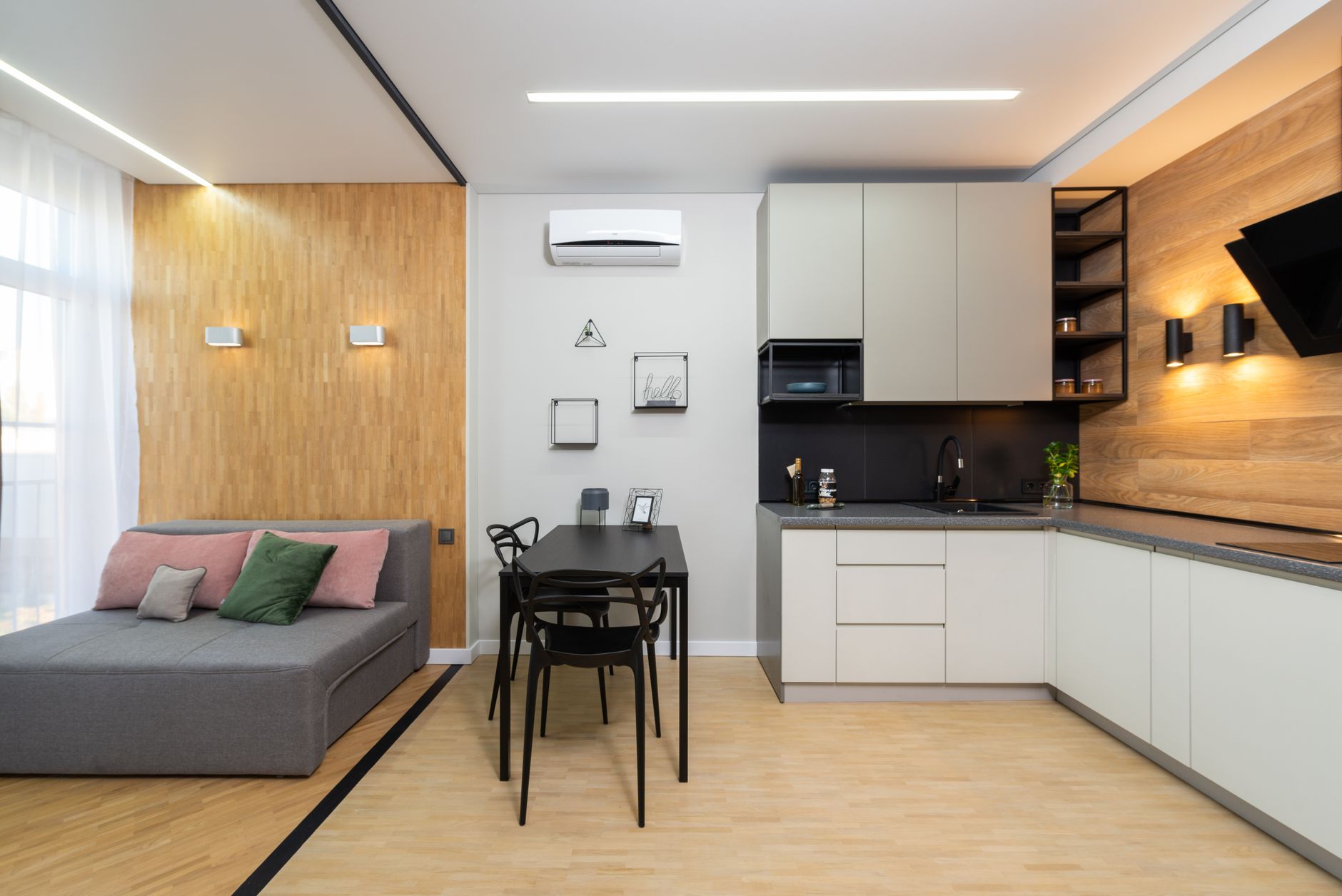
The things already in place tend to be mounted, wired, or plumbed in. An air conditioner sits high on the wall in most apartments, even when the room has nothing else in it. A small gas or induction hob takes up part of the kitchen counter.
The bath is often a prefabricated unit bath with a reheating function and a control panel beside it. The toilet has a washlet seat. A sink, a water heater, a balcony with a drying pole, and a shoe cupboard by the door all come with the unit.
Nothing about this setup is decorative. Each item is either fixed to the building or too difficult to remove between tenants. The air conditioner stays put; moving one is expensive and messy. The light socket stays empty. A shade is light enough to carry away.
What Is Missing — and Why It Catches People Off Guard
A Western apartment usually starts with a refrigerator, a stove, and somewhere to sleep. A Japanese rental often starts with none of those. The kitchen has a hob but no oven in many cases. The washing machine is usually not included, and neither is the fridge. In a few older units, even the hob is something the tenant brings along.
Curtains are not part of the lease, and in some places the light fixtures are not either. That last one is the part I had to see to believe — a bare socket in every room, waiting for a tenant to bring a shade.
The Listing Language
Listings do not hide any of this, once you know what the phrases mean. “No appliances” usually means no refrigerator, washing machine, or microwave, but the air conditioner and the hob may still be there. “Appliances included” means the white goods come too. “Furnished” means furniture and bedding, the kind of setup a weekly or monthly apartment offers.
The phrases do most of the work in a listing, but they are not a legal guarantee. The move-in condition still depends on what the previous tenant left and what the owner replaced. Realtors can explain which phrase applies, but the actual room is the final word.
On a viewing, the difference is obvious. A furnished place looks like someone already lives there. An unfurnished one looks like a stage before the set arrives. The same wall and floor read differently, and the listing photos usually show whichever version photographs better.
How People Fill the Gap
Most people do not buy all of this new. The second-hand chains carry stacks of used refrigerators and washing machines, cleaned and tested. Most people walk in with a list and leave with a working kitchen in one afternoon. A previous tenant’s fridge is sometimes left by the rubbish area, and the building owner arranges collection. That is not a gift so much as a thing nobody wanted to move.
Realtors often offer an appliance bundle when the lease is signed. The basics arrive before you move in, or on the same day. That convenience is not free, and it lands on top of the deposit and key money. The move-in set is a single purchase from a second-hand shop: fridge, washing machine, microwave, table, chair, and a futon.
None of this shows up in the monthly rent figure. It is part of the first-month outlay, the same way the deposit and key money are. An empty apartment is not really cheap to start. It is cheap month by month, once the furniture is already yours.
It Varies by Landlord and Building
The unfurnished norm is not one rule across the country. A newer build aimed at salary workers may come with a full set of appliances and a bed. A weekly or monthly apartment includes everything down to the dishes. A UR block sits somewhere in the middle, with the mounted things in place but the white goods and furniture left to you.
The national housing survey divides rented homes into public, UR, private, and employer housing. In practice, what comes inside changes with the landlord, the age of the building, and the local market. A private wooden apartment from the 1980s is a different animal from a managed tower put up last year. The government’s family income survey separates private rentals with exclusive facilities from those with shared ones.
What This Means When You Compare a Listing
Compare two flats with the same rent in the same building. One may be fully furnished, the other empty. The rent number alone does not tell you which one is cheaper. You have to add the cost of filling the empty one and ask how long you plan to stay.
Some people prefer the empty room for that reason. If you move every few years, owning your own fridge means you are not paying twice for furniture you do not keep. If you are staying six months, a furnished weekly flat makes more sense. The choice is about time, not taste.
The lease itself is where the real surprises live. The deposit, the key money, and the guarantor are a separate conversation. I wrote a full walkthrough of the renting process for anyone looking at one of these empty rooms for the first time.
References
- Japan’s Housing and Land Survey (e-Stat / Statistics Bureau of Japan) — how rented dwellings are classified into public, UR, private, and employer housing.
- Family Income and Expenditure Survey (e-Stat / Statistics Bureau of Japan) — residence type categories, including private rental with exclusive and shared facilities.