
The row of bento boxes at my station never looks like a meal. It looks like a shelf of small, transparent trays with compartments. Then you pick one up and the weight tells you there is a whole lunch in there, arranged to survive the trip.
The Box and What Is in It
A bento (弁当) is a single-portion meal packed in a lidded container. The word covers the food, not just the box. The boxes range from clear plastic trays at the konbini (コンビニ), the convenience store, to bentwood or lacquered containers carried from home.
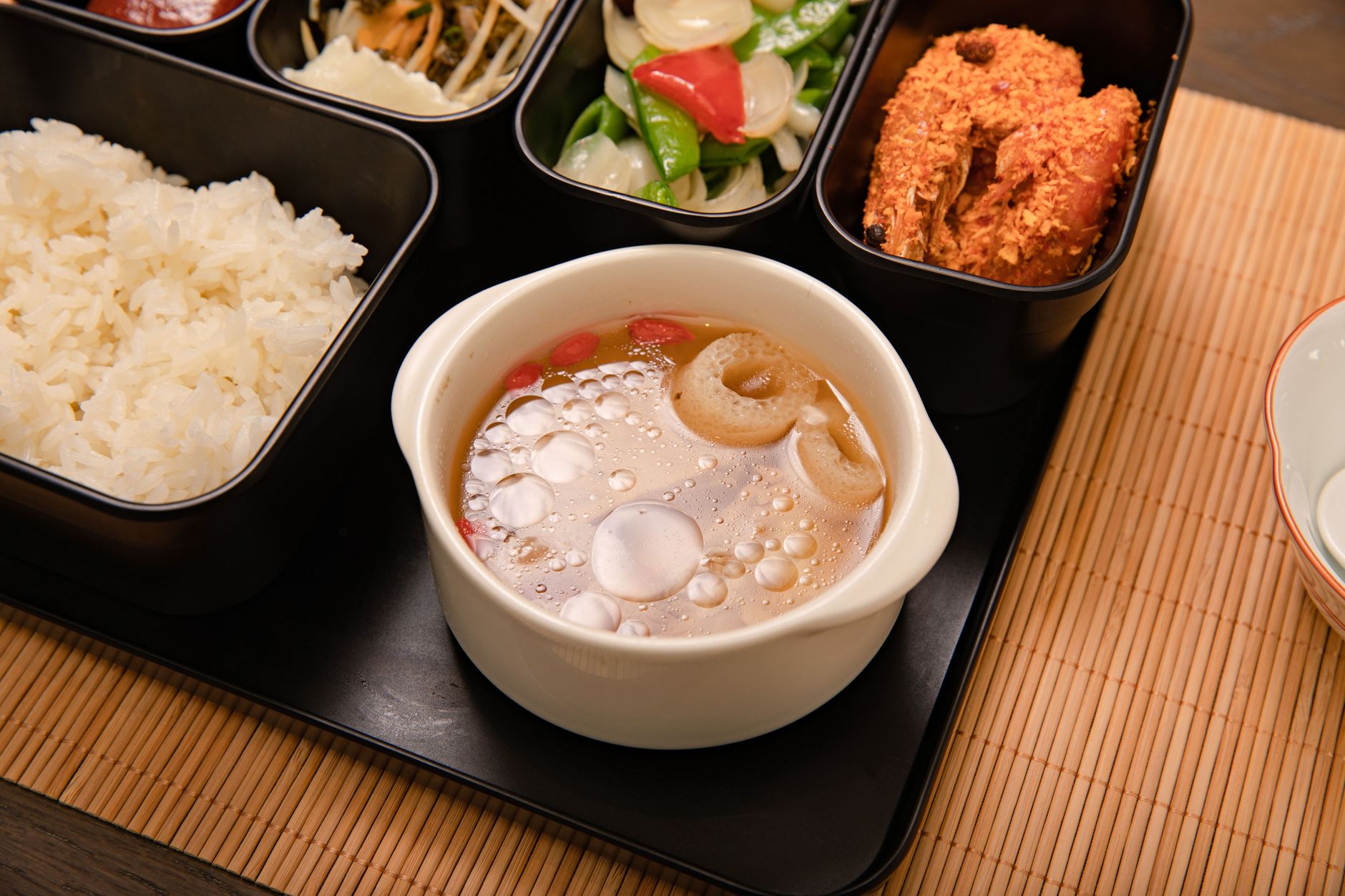
At the supermarket case where I shop, the bentos stack in rows with clear lids. You read the meal from above before you touch it. Rice fills one compartment, the main another, and the small sides sit in their own narrow channels.
The Rice
In the bentos I pass on the shelf around Osaka, a portion of rice usually occupies one side. It is cooked and cooled to the temperature it will be eaten at. It is often plain, or lightly seasoned with salt or sesame. That separation is the same instinct behind a typical Japanese breakfast, where rice, fish, and soup stay in their own places.
The Main and the Small Sides
Beside the rice sits the main. In the boxes I buy, that means a piece of fried chicken, a fillet of grilled fish, or a few slices of pork. Around it are two or three small sides: a boiled vegetable, a small salad, a pickled plum or some pickles.
The Dividers
Some boxes use plastic dividers; others use a lettuce leaf or a sheet of paper to keep flavors apart. The dividers are not there to make the box pretty. They keep the juices of one thing from soaking into the rice.
The lid matters more than it first appears. In the boxes I buy, the lid sits flush rather than clamping tight. It is clear, so you can see the arrangement before you open it. The food is packed low enough that the lid closes without pressing anything.
How a Bento Is Packed to Travel
Everything I have seen in these boxes is cut into pieces that can be lifted with chopsticks. There is no knife, and no separate sauce cup that might spill. A piece of fish may keep its skin, but the portion is shaped to fit the corner of the box.
The packing works from the container outward. In the boxes I see, the main goes down first, then the rice packs around it, then the small sides fill the gaps. Nothing piles high above the rim, because the lid would crush it. The food sits level with the box’s edge.
One thing surprised me: the food in most of these boxes tastes like it was cooked to be eaten at room temperature. In those boxes, fried chicken stays crisp enough and the vegetables are braised or dressed in a way that holds. I had assumed a cold bento would be a compromise. It usually isn’t.
This is the opposite of a casserole or a soup, where everything mixes. A bento is built to keep the parts recognisable. A little juice may seep, but the dividers and the level packing keep it from becoming one flavor. That is the point of the compartments.
How a Bento Is Used
In the morning around my station, I have seen commuters pick one up and carry it to the office. They leave it on the desk until lunch. Nobody I have worked with reheats it. That part felt odd to me at first.
A bento carried from home, in my experience, is assembled before work and sits at room temperature until noon. The food is chosen for that: nothing raw, nothing that needs reheating. The rice stays firm; the main was cooked to be eaten cool.
At lunch, the lid comes off and the box sits open on the desk. Most people around me eat straight from the box. That is part of what makes it a meal, not a collection of snacks. The arrangement matches the idea in a week of ordinary meals I have written about before.
The Variations: Ekiben and School Lunch
The same object appears in a special form at train stations. An ekiben (駅弁) is a bento sold for a rail journey, often in a paper or thin wooden tray. I have seen travelers buy one on the platform and open it as the train pulls out.
The ones I have looked at usually sell a place as much as a meal: a regional fish, a local rice, a sauce tied to one town. The portioning is the same as a station konbini box — rice on one side, main on the other, a few small side dishes in between. The difference is the packaging and the story on the wrapper.
The school lunches I have seen use a similar arrangement on a larger scale: rice, a main, a vegetable, all separated in a tray. The portions are bigger and the sides change by day, but the logic holds. One lunch becomes one tray with balanced compartments.
The tray is a larger version of the same separated plate logic you see in a typical Japanese breakfast, where several small dishes stay distinct on one tray.
Why the Shape Makes Sense
A bento is the structure of a Japanese meal flattened into one box. A home dinner in many households I know follows a pattern called ichiju-sansai — a soup and three dishes, plus rice. A bento is the portable version of that logic: a main, a couple of sides, and rice, with the soup left out because it would not travel.
That is why the compartments exist. They make the meal structure visible before you eat it. You can see the rice, the main, the vegetables. Nothing hides under anything else. The order of a dinner table fits into a container you can hold in one hand.
There is also a practical reason for the open, flat shape. A bento has to travel. It gets carried in a bag, set on a train tray, maybe tilted in a locker. The food stays in its section because it is packed level and tight. A bowl of soup would not survive that. A bento is built to survive it.
Where I grew up, a packed lunch often centered on a sandwich, a piece of fruit, and a bag of chips. Those things travel fine because they are individually wrapped. A bento centers on rice and needs compartments to keep the parts separate. The box is the plate.