
At 7:40 on a Tuesday, the shelf nearest the door holds rows of rice triangles. They are the konbini food I buy more than any other. Each one is about the size of a hand, and the label shows exactly what is inside. I used to think this was the snack section. It is not. It is breakfast, lunch, and sometimes dinner.
The Morning Shelf: Onigiri First
The rice triangle is usually the first thing a hand reaches for. It is a ball of rice pressed around a small pocket of filling, wrapped in a strip of nori seaweed. The plastic is clever. A numbered tab keeps the nori away from the rice until you pull it. Then the seaweed stays crisp in your hand.
Common fillings are salted salmon, tuna with mayonnaise, pickled plum, and seasoned kelp. The label uses a small picture for each one, so you can choose without reading much Japanese. I have picked up the same one four mornings in a row and not been tired of it.
This is not the full spread of a typical Japanese breakfast. It is the weekday version. You eat it at a desk, on a train platform, or walking from the station to the office.
The pull tabs are on the back of the wrapper. The instructions are printed as tiny pictures, so you can follow them without reading. Peel the center tab first. Pull the sides. The nori snaps into place around the rice like a fresh sheet of paper. It took me a few tries to get the order right.
The Desk Lunch: Bento and the Crustless Sandwich
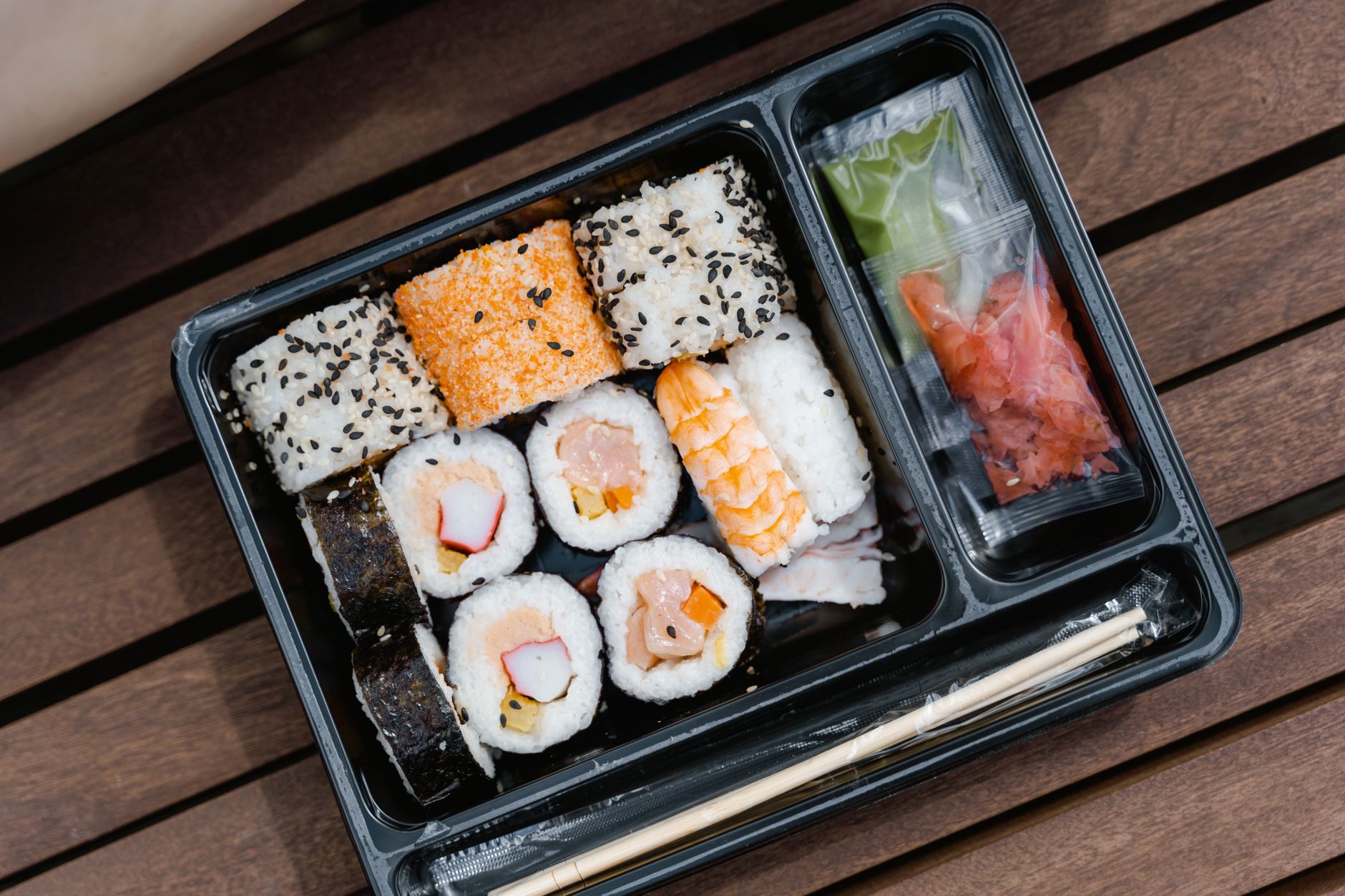
The bento sits on the same cold shelf, in a clear plastic tray. Rice fills about half of it. The rest holds a main item and two or three small sides. It is not arranged with the care of a homemade bento box. The idea is the same, though: one tray, one meal.
Most bento are meant to be heated. The cashier often asks before the food goes in the bag, which took me a while to understand. I would stand there with a blank look while the person behind the counter repeated the question. The plastic lid has a corner you peel back before microwaving, and the steam does not blow the top off.
Next to the bento, the sandwiches sit in plastic pouches. The bread is soft and white, with the crusts cut off. A standard one is cut into two or three rectangles, not halves. That detail is the one that really tells you this is not a deli sandwich from back home. The fillings are egg salad, ham and cheese, tuna, or a fruit-and-cream mix.
I used to skip the egg salad one on principle. Then a coworker bought two and said one word after the first bite: so. Some lost time there. On a week of ordinary meals when the kitchen at home was empty, lunch was often a konbini bento. Or a sandwich. Four days straight.
Some of the bento have a small packet of soy sauce or mayo under the lid. The packet is the same size as the ones on an airplane tray. It is just as easy to lose. I have ripped one open over a keyboard more than once. The result is not ideal.
The Hot Case, Later in the Day
The hot case sits by the register, and it goes mostly ignored until mid-afternoon. Then a small crowd forms in front of the glass. The items sit in paper sleeves or foil trays. Fried chicken is sold by the piece. A steamed bun filled with pork or curry is sold beside it.
Most of what is in the case is built for one hand. You can eat a fried chicken thigh while standing outside, and the paper wrapper catches the oil. A croquette is a flat, breaded oval of mashed potato or pumpkin. It is not a side dish here. It is the whole afternoon snack.
The food in the hot case usually comes without a plate. That sounds obvious, but it changes how the food is designed. Each piece is neat enough to eat from a paper bag. I have watched a guy eat a nikuman in the rain with one hand. He held an umbrella with the other. It worked.
The fried chicken label often names a prefecture. That surprised me at first. A snack that costs a few hundred yen carries a small origin story on the wrapper. It does not make the chicken taste different. It just tells you where the bird was raised.
The Sweet Shelf and the Drink Fridge
The sweet shelf sits directly under the hot case, but it has a different rhythm. It gets busy after lunch and again after dinner. Small packs of chocolate, gummies, and cookies fit in a shirt pocket. The ice cream freezer is next to it, and the door fogs up every time someone stands there too long.
The drink fridge runs along one wall of the store, from the door to the register. Green tea and barley tea take up several rows. Canned coffee sits beside cold milk tea, sports drinks, and a rotating line of fruit-flavored sodas. In winter, the same canned coffee appears in a warmer next to the register. The cold bottle stays on the fridge shelf.
Most people buy a drink with whatever food they have picked. The pairing is automatic after a while. A cold green tea with onigiri, a hot canned coffee with a winter bun. Few people around here think about it much.
The dessert cups are where the seasonal shelf gets most visible. In summer they hold mango pudding and melon jelly. In winter the same cups hold sweet red bean paste and chestnut cream. The change happens without announcement. One week the shelf is yellow, the next week it is brown.
The Same Core, Re-Skinned by Season
The onigiri shelf stays put through the year. The bento and sandwich racks next to it barely move. Around that fixed core, the seasonal items rotate through in a slow, predictable pattern. Spring brings cherry-blossom wrappers and pink sweets. Summer pushes cold noodles and citrus drinks to the front.
Autumn is the heaviest season on the shelf. Sweet potato, chestnut, and pumpkin flavors show up in sweets, drinks, and sometimes the sandwich fillings. Winter adds oden near the hot case and warm desserts that come in a cup. The core does not change, but the edges of the shelf tell you what month it is.
A konbini dinner rarely resembles the balanced ichiju sansai structure you might see at home. It is not trying to. It fills the same hungry gap with fewer dishes and without anyone waiting for you to finish the rice.
Items with a short season usually carry a date in the corner of the label. The date is sometimes only a few days out. That is not a sign of low quality. It is how the shelf turns over. The core items have longer windows, but the seasonal ones come and go quickly.
Frequently Asked Questions
Do konbini onigiri taste like fresh rice?
They taste like rice made a few hours earlier. The filling is seasoned well. It is not the same as a home-cooked meal, but it beats a gas station sandwich.
Can you eat konbini food for breakfast?
Yes. The onigiri and the sandwich shelf are busy from the moment the store opens. It is a normal weekday breakfast here, eaten on the way to work or at a desk.
What is the most common konbini lunch?
There is no single answer. A bento, a sandwich, or two onigiri all show up in the same office. The choice often depends on whether people have time to heat something up.