
The Room You Walk Into
The coin laundry near my station is the ordinary kind, the kind of coin laundry you find all over Japan. A row of large machines runs along one wall. On the other side, dryers sit stacked two high. A long folding counter runs down the middle. Next to the door are a change machine and a small sink. Nobody works there. You put coins in, and the room does the rest.
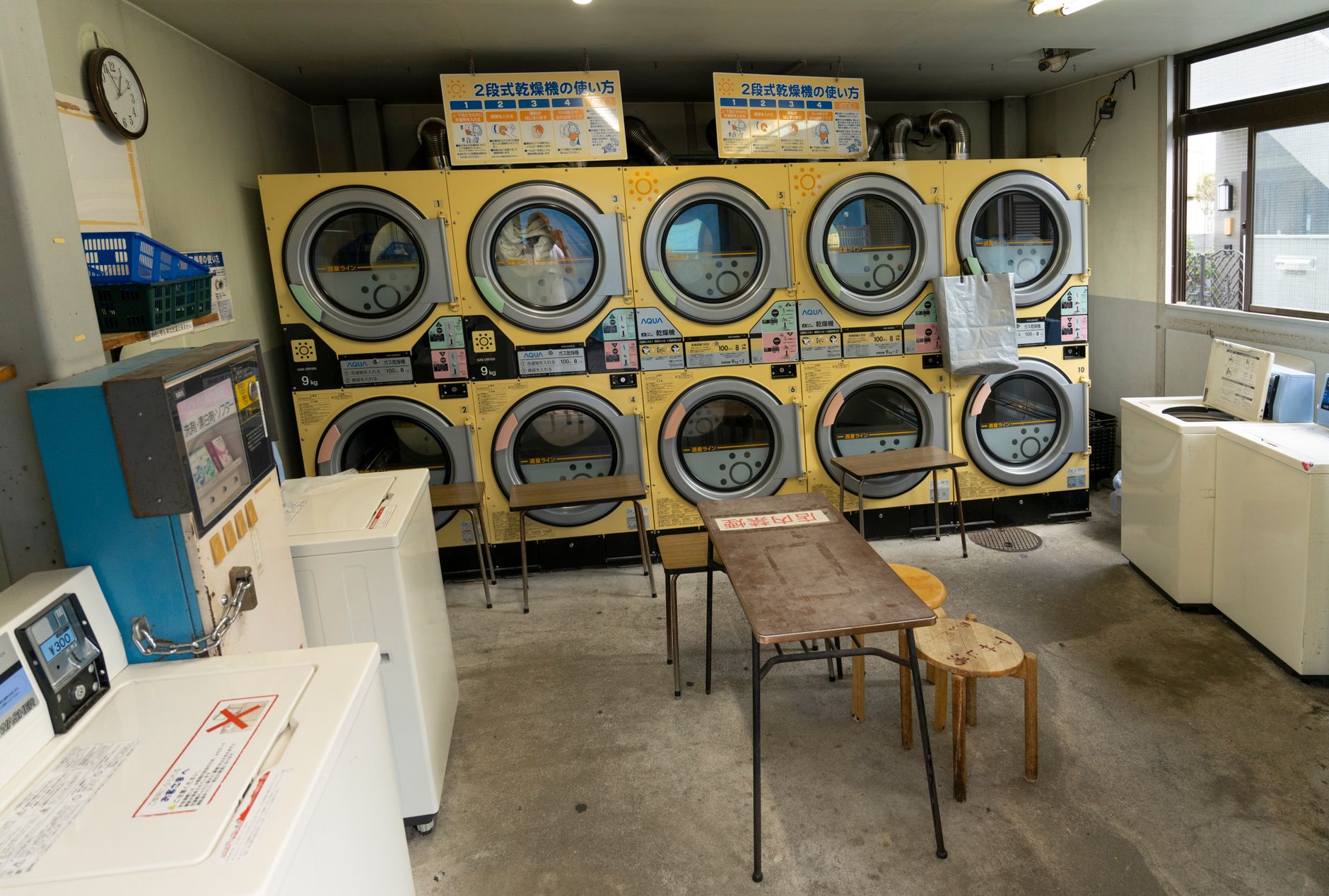
The word is a direct borrowing: koin randorī (コインランドリー). It sounds like English, because it is. The first time I walked in, the room felt more like a workshop than a laundry room.
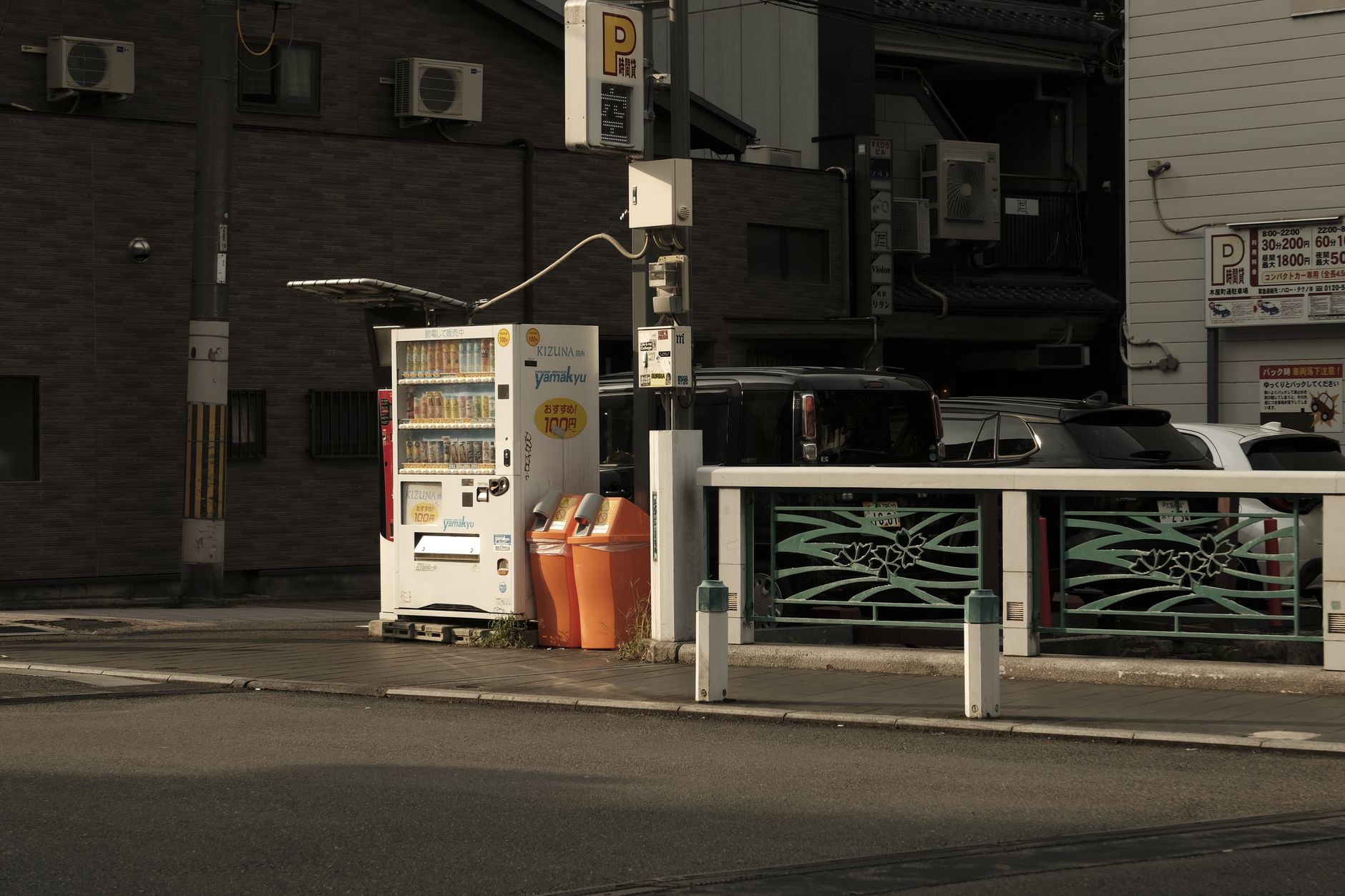
A vending machine sells single-use detergent packets next to the sink. Another by the door dispenses hangers and folding clips. The room assumes you came prepared, but it is ready if you didn’t.
The machines are numbered, but nobody pays much attention. The dryers run on a simple dial. You put coins in, turn the knob, and the time appears. There is a sink for hand-washing small items, and a rack near the back holds clothes that can’t go in the dryer.
A printed sheet explains what to do if the machine eats your money. I have never needed it, but I like knowing it is there.
What People Bring
The main thing people bring is bedding. A futon (布団) here is not a Western-style mattress. It is the padding you fold and store each morning. It is light, but it is awkward and too large for most home machines in my part of Osaka.
Duvets, blankets, and winter curtains come for the same reason. The coin laundry’s large machines handle a bulky item without groaning. Most home machines around me would not. So the big stuff makes the trip.
Then there are the people doing their ordinary weekly wash. I see them in the evening, pulling a small suitcase behind them instead of a laundry basket. Some of them don’t have a machine at home. Others do. I don’t ask which; it’s not my business.
I used to assume the room was only for people without washers. That turned out to be wrong. More than once, I’ve seen a neighbor I know has a machine at home folding a duvet. The coin laundry is for things that don’t fit, not just for people who lack the appliance.
When I first moved here, I assumed the coin laundry was like the ones back home: a fallback. Now I see it differently. It handles the things a home unit was never meant to take.
Curtains are another common load. In winter, people bring the heavy fabric from their windows. It comes out smelling like the machine’s hot drum, not like home.
Why a Shared Laundry Exists
The apartment I live in has no place for a washing machine. There is a hookup in some nearby buildings, but not in mine. I don’t know the reason. I only know the result: the weekly wash happens a few streets away.
A friend who lives closer to the station has a machine, but it is small. For anything bigger than a towel load, she uses the coin laundry. That suggests the shared room does not exist only for people without a machine. It exists for anything a home unit cannot handle.
In my part of Osaka, a lot of the apartments are small. That part is easy to see. Why some of them lack a machine hookup is less clear. What I know is the practical answer: when a home machine can’t do the job, the corner laundry can.
There is no attendant and no front desk. In that way, the place is closer to a vending machine than to a shop. You put money in, the machine runs, and you leave when the timer stops.
A full-size machine would crowd the small entryway in my building. I have never measured it, but the space simply isn’t there. The coin laundry is not a recent fix. It sits beside the station like a quiet piece of infrastructure. I don’t know when it opened, and I have never thought to check.
The Errand Itself
A visit has its own rhythm. You load the machine, start it, and leave for about forty minutes. There is a konbini across the street. I buy a drink, come back, and wait on the folding counter.
You can tell the locals by how efficiently they move. They sort at the counter, stack the dryers, and fold before the next person needs the space. The room is never crowded for long, because nobody treats it as a place to linger.
Back home, a laundromat often meant leaving your clothes and coming back later. Here, you stay. The room is small, and the whole point is to finish. It is more like a shared utility than a destination.
The dryers are fast. I’ve never timed one, but a heavy duvet is dry before I finish a can of coffee. The heat is different from the dryers I grew up with. Shorter and sharper. I won’t pretend to know why; I only know the result.
The first time I used it, I put too many coins in and the machine ran for an extra cycle. The timer is simple. You pay for time, not for results.
On a Sunday afternoon, the place is busiest. You see families with two baskets and single people with one. Everyone waits outside or by the counter. Once I left a load in the dryer too long and came back to find it still warm. The machine had stopped, but nobody had touched it. That is the unspoken rule: don’t move someone else’s clothes.
I have never seen anyone leave their laundry unattended for hours. The room is too small for that. You time your errand around the machine.
This is not a Japanese convenience store, where one shop handles many small jobs. A coin laundry does one job and leaves. That is the whole convenience.
The Ordinary Fact
Nobody thinks about the coin laundry until they need it. Then it is just there, like the vending machine on the corner or the konbini that never closes. A room full of machines, a folding counter, and the quiet sound of water moving through other people’s things.
By the time I fold my own clothes, the room has mostly emptied out. The last dryer stops. The light stays on. Tomorrow, someone else will bring a futon that does not fit anywhere else.
You get used to it quickly. The first visit feels like a small trip. The tenth feels like taking out the trash. It is not a bad thing. It is just ordinary.
The sign on the door says 24 hours. I have never been there at three in the morning to check. Some things you just believe. The lights are on whenever I walk past, and that covers most of what I need.