
The first Japanese public toilet I used was in a train station. I stood outside the stall for a few seconds, trying to figure out whether it was occupied. The lock was on the inside, where I could not see it. There was no gap under the door to check for feet.
The answer sat above the door: a small indicator that changes color when someone turns the latch. I learned to look for it. Now I do not think about it. That is the thing about these restrooms. They are easier to use than they first look, once you know what the room is telling you.
Public restrooms are one of those everyday conveniences that disappear when they work. You notice them only when they are missing or dirty. In the stations and parks around Osaka, they are usually there, and usually open.
The Occupied Board and the Door Indicator
In many station and park restrooms around Osaka, there is a board near the entrance. It shows a grid of small lights or colored marks for the stalls. Each row tells you whether that stall is open. It saves you from walking down the row and rattling every door.
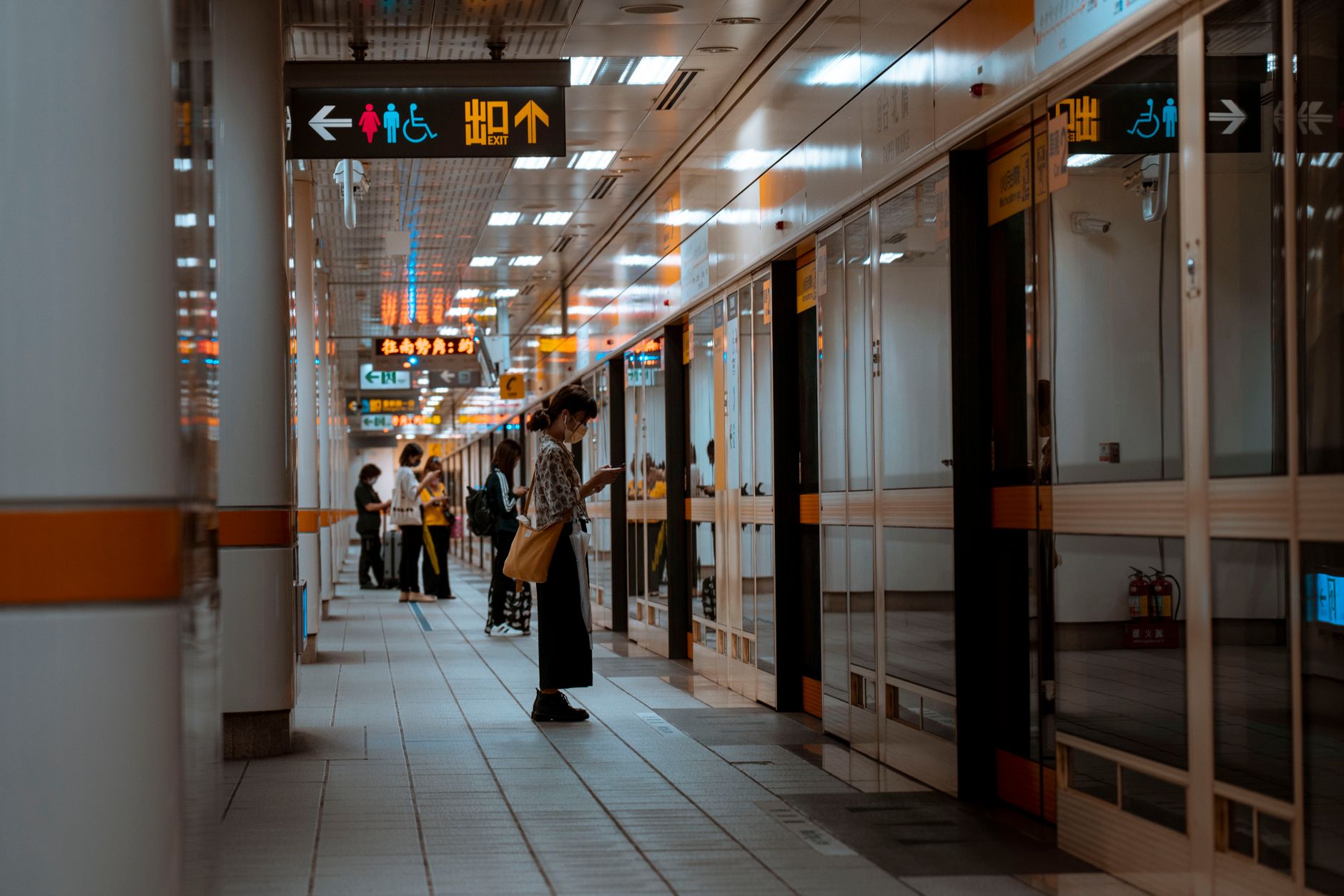
At bigger stations, the restroom is often tucked around the corner from the coin lockers and the ticket gates. It is a small, functional room you pass on the way to everything else.
The stall door has its own signal too. The latch inside does more than lock the door. It moves a small indicator on the outside from blue or white to red. Sometimes the words “vacant” and “occupied” appear in Japanese and English. That little red mark is what I check now.
When you turn the latch, the indicator moves with it. You can tell from a distance. You do not have to knock or listen for a reply. The indicator does that work for you.
What the Stall Holds
Inside, the space is compact. In older public restrooms, the stall is a tight box with a toilet, a small sink, and not much else. Newer ones give you a little more room. It is still designed to be used and left.
There is almost always a hook for a bag or a coat. There is a small shelf near the toilet for a phone or a wallet. The floors are usually tiled. The walls go down close to the floor, with no big gap like the ones I grew up with. That gap was one of the first differences I noticed.
The toilet has a panel on the wall beside it. The panel controls the washlet. I am not going into those buttons here; that is its own topic. But the panel is part of what you see when you walk in. It can look like a remote control if you have never met one.
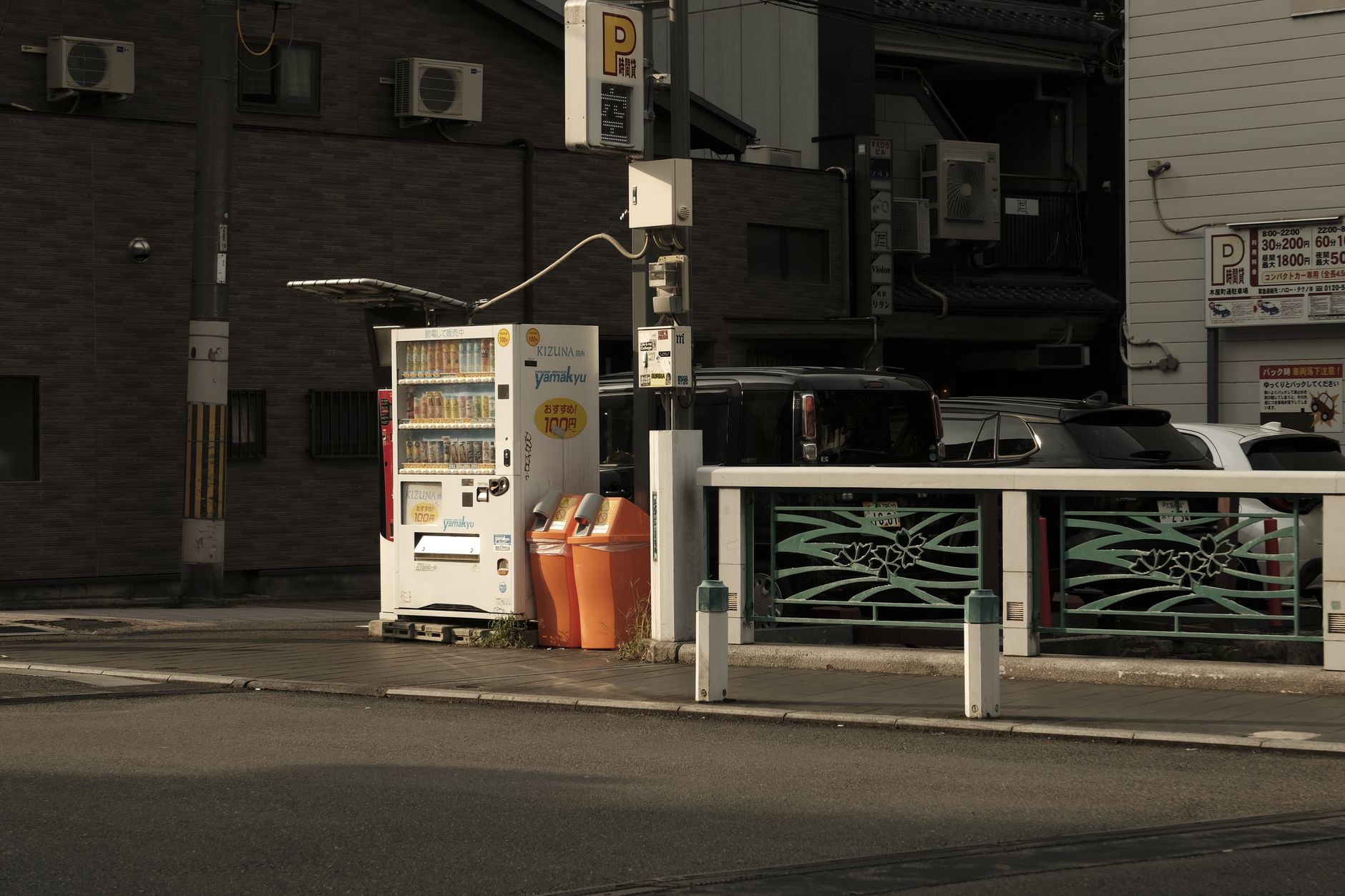
There is often a row of vending machines just outside the station restroom, selling drinks for the wait. The restroom itself stays separate from that noise.
The Small Sink on the Tank
Some public restrooms have a sink that sits on top of the toilet tank. You wash your hands there. The water drains into the tank and gets used for the next flush. The first time I saw one, I thought it was clever plumbing. It still is.
This kind of sink is more common in older buildings and tight spaces. You flush, and clean water runs from the faucet for a few seconds. If you wash your hands, the water goes into the tank instead of a separate drain.
It does not replace the regular sink entirely. Many restrooms have a shared row of sinks outside the stalls. But the tank-top sink is the one that surprises people. It looks like something from another era, and it still works fine.
No Towels, and What People Do Instead
Most public restrooms I have used here do not have paper towels. A lot do not have hand dryers either, though some newer ones do. People carry a small towel or handkerchief instead. I learned to keep one in my bag after my first winter, when my hands stayed damp for half the walk home.
This is the part that catches visitors off guard. Back in the US, I expected paper towels or an air dryer. Here, the default is that you bring your own. It is not a rule on the wall. It is just how the room is stocked.
Once in a while I find a hand dryer, but I do not rely on it. The small towel is smaller than a washcloth. It dries before the next time I need it. It has become one of those things I throw in the bag without thinking.
Trash, Bins, and the Sanitary Box
There is usually a small bin in the stall. In some restrooms it is a covered metal box with a pedal or a small opening. People use it for small items. It is not a general trash can like the ones near the sinks.
There is also a separate box for sanitary products. It appears in nearly every women’s stall and in many family or accessible stalls too. It gets its own liner and its own collection. The bins are there, they are emptied, and the floor stays clear.
How It Stays Clean
At a station or a park, I often see a staff member in a uniform go through the restroom on a schedule. They carry a mop, a cloth, and a clipboard. The cleaning is frequent enough that the room feels presentable more often than not. It is not magic. It is routine work.
Some restrooms keep a cleaning closet near the entrance, with a mop and a bucket behind a folding door. The schedule might be posted by the door. That posted schedule was one of those details I did not expect the first time.
There are also restrooms that are less clean, especially late at night or at the edges of the city. I do not want to make it sound like every public restroom is spotless. What I notice is that the cleaning system exists, and it is visible in a way I did not see as often back home.
Convenience store restrooms are a different situation. Those are privately owned, and the store staff clean them. The public ones I am describing get cleaned by the city or the station. A konbini toilet can be a good fallback, but it is not the same system.
A Few Things I Still Can’t Explain
Why the gap under the stall door is so small compared to what I grew up with is one of those things. People give different answers about privacy, drafts, and construction. I have not found a single documented reason that settles it. It might simply be the way partitions were always made here.
The same goes for the absence of paper towels. It is practical. It lines up with carrying a handkerchief. But I cannot point to a law or a cultural decree that made it so. Some things are just the way they are. The most honest thing I can say is that I do not know the origin.
That is okay. The restroom works fine anyway. I do not need a historical reason to appreciate a clean stall, a working lock, and a place to hang my bag while I wash my hands.