
The first thing at a sento is the row of shoe lockers just inside the door. Nobody walks past them. Shoes off at the door is a habit that carries into a public bath without anyone having to say it. The lockers are usually narrow, wooden, and worn smooth. Keys go around a wrist or into a robe pocket.
Beyond the lockers is the counter, and behind it a small raised booth. The person at the booth sees both changing areas from one seat. The counter is where a person pays, buys a small towel if they forgot one, and heads left or right. The posted adult fee at my local sento has been 500 yen for a while, as of early 2026.
The counter also sells soap and a few bath goods. Some places rent a larger towel for drying off. The booth is not surveillance; it is the layout of an older building. After the first visit, a person stops noticing it.
What a Sento Is
A sento (銭湯) is a public bathhouse. The name marks the difference: the first character means coin or money, the second means hot water. It is a place for getting clean and for soaking, but not in the same room. It splits the work: cleaning in one room, soaking in another. That split is what makes it feel unfamiliar at first, even before a person has walked in.
Sento are less a daily necessity now than they once were, because many apartments have their own baths. In my part of Osaka, the remaining ones stay open more as a neighborhood routine than a last resort. Hours vary, and most close one day a week. The sign by the door lists them.
The Two Changing Rooms
There is no shared changing area. The entrance splits: one side for men, one side for women, each marked with a curtain and a colored sign. I do not know how far back the split goes. The changing room itself is plain: wooden lockers, a few stools, a mirror, a scale, and a basket for used towels.
A person undresses at the locker and carries only a small towel. Phones stay in the locker. Most people move through the room without much talk. A nod or a small bow is enough when someone passes. The small towel is not for hiding; it is for washing and for modesty, and it stays with a person into the bath area.
What the Washing Area Looks Like
The washing area is a tiled room with low stools in front of mirrors and a line of showerheads and faucets. The stools are low enough that the work happens close to the floor. A bucket sits on the tile. People fill the bucket, rinse the stool, and sit.
The showerheads run on a button or a coin timer in some older bathhouses. A person presses it, gets a short burst of water, and presses again. The bucket is not decorative. It holds water for rinsing the stool and the body before soap.
The big bath is through an open doorway or past a low wall. The washing area is where cleaning happens. The bath is where soaking happens. That order is the part most first-time visitors get backwards. The bath is not cleaner or more important; it is simply for a different purpose.
The Bath Itself
The bath is usually a large tiled pool, deep enough to sit in up to the shoulders. The water is hot. Not warm. The first visit involves a slow easing in, because the heat takes a minute to get used to. The water is shared by everyone in the bathhouse that hour. It is not drained after each person. The practical reason the washing happens first is straightforward: the water has to stay clean for the next person.
Some baths have jets or a cold plunge, but the ordinary sento keeps one hot pool and maybe a small tub. The heat is the point. Nobody stands around deciding whether to get in. The water smells faintly of minerals, or of whatever scent the bathhouse uses for its own. Some sento add herbs or yuzu on certain days, but the ordinary water needs no explanation.
People sit with the water up to their chin, or lean against the side without speaking. A few watch the room. Most close their eyes. The room is louder than expected, in a way, because every small sound carries on the tile: a faucet, a bucket, a door.
The Small Towel and the Quiet
The small towel does not go into the shared bath. Most people fold it and set it on the edge, or balance it on their head. It is the one object in the room that stays personal. The quiet is not strict; it is the same kind of quiet a person finds in a library or a waiting room, only warmer.
Soap stays in the washing area. Inside the bath, there is no scrubbing, no splashing, and no rinse. Those are habits people keep without being told, mostly because the next person is sitting close enough to notice. It is not a rule posted on the wall. It is just how the room works.
My First Visit
I took my small towel into the bath on my first visit because I did not know any better. A man next to me gave a slight shake of the head, not unkindly. That was the entire lesson. He did not say a word. Later I understood: the towel is for the washing area. The bath is for sitting still.
In the years since, I have seen the same lesson repeated often. A first-timer walks toward the water with their towel and pauses. Someone nearby catches their eye and gives a tiny bow, more a dip of the head than a correction. The first-timer sets the towel on the side. That is all.
The Mural and the Ordinary Building
Many sento have a mural on the wall above the bath. Usually it is Mount Fuji, a pine grove, or a stretch of coast. The mural is not a sign of luxury. It is just a thing sento often have, like the painted tile and the plastic buckets.
It is painted on tiles, and the water pipes run in front of it. In some places it has faded to blue and white. I do not know when the murals began, and I have never met anyone who could say for certain. They are part of the room now.
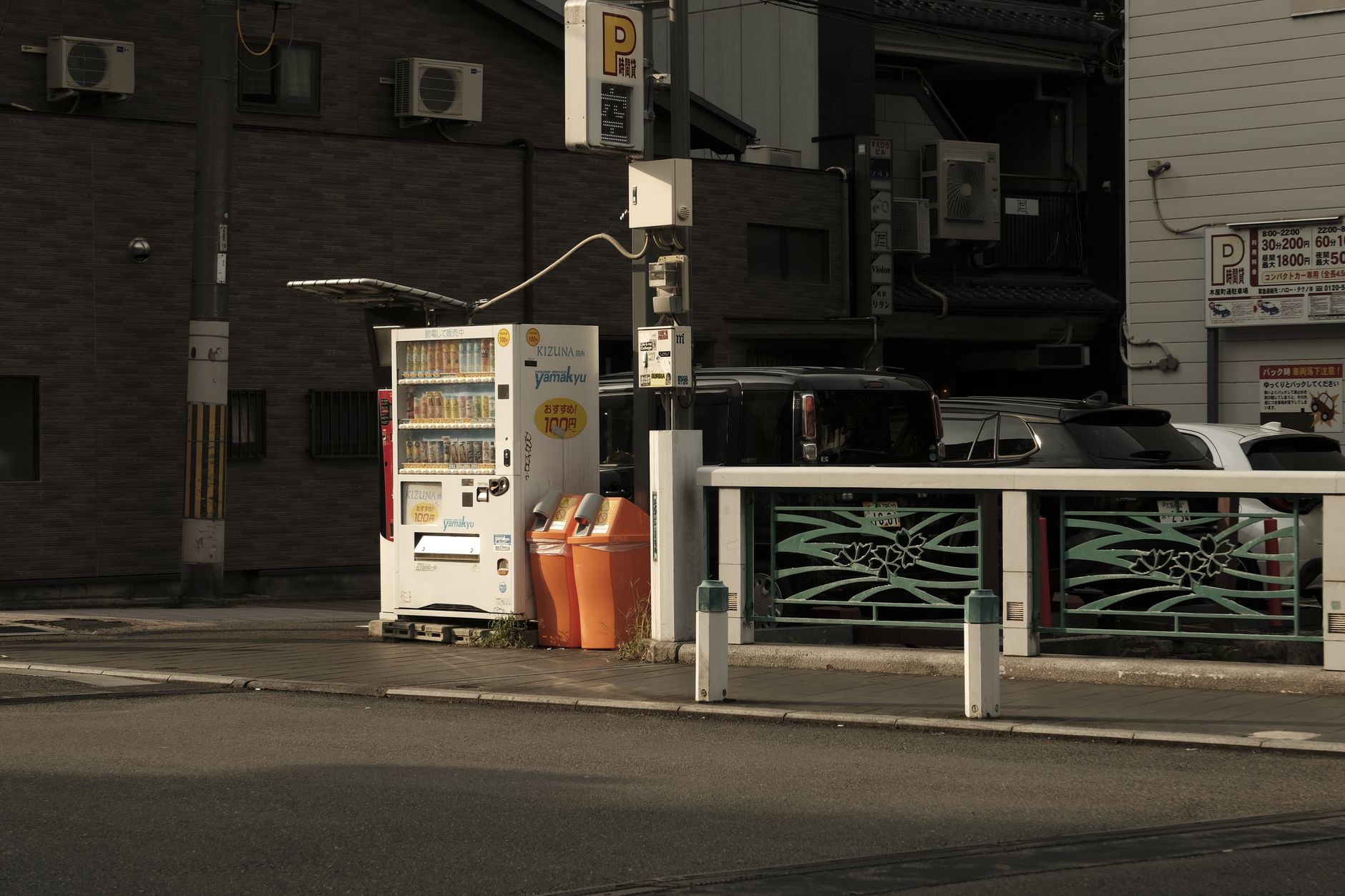
The building itself is often older than everything around it. In my part of Osaka, a sento can sit between a vending machine lot and a parking garage, with a chimney that gives it away from the street. The entrance is not grand. The locker room smells like cedar and soap. It is an everyday place, not a preserved one.
Leaving the Bath
After soaking, a person returns to the washing stools and rinses off one last time, then walks back to the locker. The floor is wet. The bucket goes back where it was. Dressing happens the way it always does, in no particular hurry. Some people buy a cold milk at the counter on the way out; the glass bottles sit in a small fridge near the front.
The small towel goes into a bag. Shoes go back on at the lockers, the same shoes-off habit in reverse, and the glass door closes. A visit usually takes about an hour. The only surprise is how quiet a whole building of strangers can be when everyone is doing the same thing.