
When friends back home ask what I actually eat in Japan, they usually expect sushi or ramen. The honest answer is less interesting and more useful. Most Japanese daily meals, at our place in Osaka anyway, are built from the same few ingredients. Those get moved around until they become a week.
A Week, Not a Menu
I kept a rough log for seven days at our place in Osaka. No restaurants, no visitors, no effort to impress anyone. Just the food that happens when two people come home late and still need to eat.
The first thing the log showed wasn’t a list of dishes. It was a rhythm. Two bigger cook-ups, two or three leftover nights, one thing from the supermarket deli, and a weekend morning when someone actually stands at the stove.
The Shape of a Meal
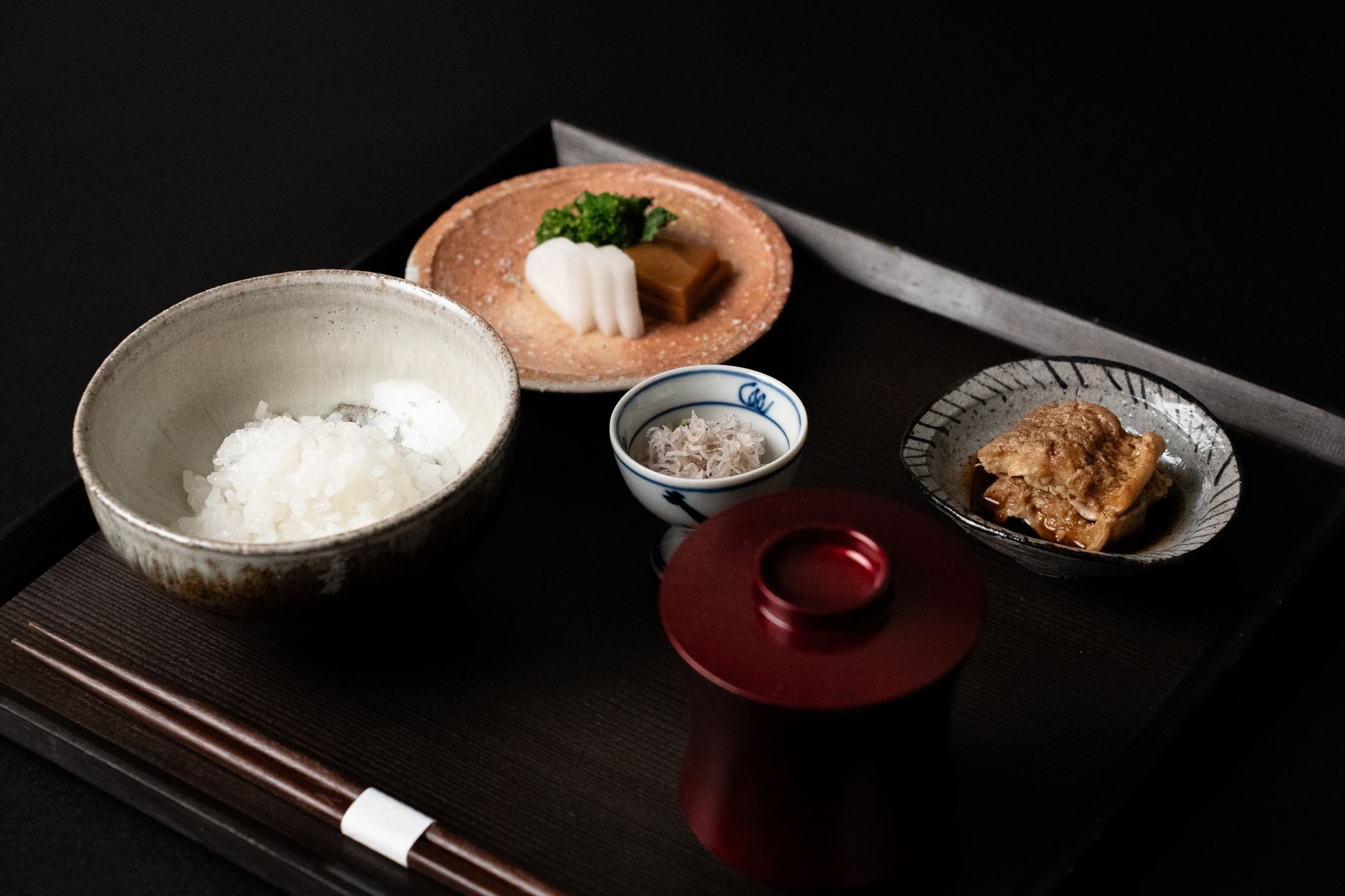
Almost every dinner followed the same quiet structure: a small bowl of rice, a bowl of miso soup, one main thing with protein, and two small vegetable sides. There is a name for this shape — ichiju sansai (一汁三菜), or one soup and three dishes.
The phrase sounds like a restaurant menu, but at home it is closer to a habit. Some nights the soup is instant. Some nights the “three dishes” are yesterday’s spinach, a few slices of tomato, and a fried egg. The shape holds. The effort doesn’t.
It also doesn’t have to be all homemade. One dish might be store-bought pickles, another a handful of cut fruit. The structure cares less about where the food came from than about how the table looks and how the meal fills you.
The Week, Dish by Dish
The log looked like this, more or less. Nothing on that list would make a food blog. That is the point. Ordinary daily meals in Japan are mostly repeatable, low-drama cooking, and the repeat is part of the plan.
- Monday — miso soup with tofu, rice, grilled mackerel, spinach with sesame. The soup was left from Sunday.
- Tuesday — rice bowls with chicken and egg, quick cucumber pickles.
- Wednesday — leftover chicken and egg rewarmed, a new pot of miso soup, tomato slices.
- Thursday — store-bought curry from the supermarket deli, rice made fresh, a bag of shredded cabbage.
- Friday — the other half of the curry, plus a fried egg each.
- Saturday — a bigger cook: ginger pork, miso soup, rice, two vegetable sides.
- Sunday — a weekend breakfast that bled into lunch: miso soup, rice, tamagoyaki, leftover ginger pork.
What Repeats, and Why
Three things showed up almost every day: rice, miso soup, and something pickled or a raw vegetable. Not because anyone decided to be traditional. Because those are what is already in the kitchen, and they fill the plate cheaply.
Rice gets made in a cooker and kept warm all day. Miso soup gets made in batches. Pickles sit in the fridge. The rest of dinner is whatever protein was cheapest or defrosted fastest.
The part that surprises people back home is the repetition. They picture a different dish every night. The reality is closer to a weekly rotation of four or five meals, with the sides changing before the main things do.
Breakfast Is Smaller Than You Think
Breakfast in our kitchen is not the fish-and-rice spread from the guidebooks. Most mornings it is toast, a fried egg, maybe a banana, and coffee. On days with time, it is leftover rice and miso soup with a reheated side.
That is closer to what a typical Japanese breakfast looks like at home than the ceremonial version. The structure is still rice and soup, but the soup may be from a packet and the fish may be absent.
The big weekend breakfast appears maybe twice a month. When it does, it is closer to the image people have in their heads: rolled omelet, grilled fish, rice, soup, small dishes. But midweek, nobody is making that before a commute.
The Hidden Work: Shopping and Leftovers
A week of meals like this is not built at dinnertime. It is built at the supermarket, once or twice a week, with a loose plan that is not written down.
Buy two vegetables, a protein or two, one thing from the deli, and enough rice and eggs. Then let the leftovers decide the next night. It sounds haphazard, but it is actually a system.
The leftover nights are not a failure. They are the point. Cooking a little too much on purpose means Thursday becomes a ten-minute dinner instead of a forty-minute one.
The supermarket deli is not an emergency. It is part of the plan. A box of curry one night buys an hour that gets used for laundry or sleep. Nobody pretends it doesn’t exist.
Why Small Dishes Work
There is a practical reason for all those little plates. Leftovers can be spread out. A half-serving of spinach from Monday becomes a side on Wednesday without anyone feeling like they are eating the same dinner twice.
Small portions also mean a meal can be adjusted. If the fish is small, add another side. If the soup is hearty, skip a dish. The structure bends without breaking.
The rice stays the anchor. Everything else is arranged around it. That is the real difference from the plate model I grew up with. Rice is not the side; it is the center.
How It Sits on the Table
At home, dinner is not served as one big platter in the middle. Each person gets their own set: rice bowl, soup bowl, main plate, small side dishes. The table looks busier than the amount of food actually is.
The soup bowl gets picked up and drunk from. The rice bowl stays in one hand. Nobody passes dishes around family-style the way I remember from home, except maybe the vegetables.
That arrangement makes the meal feel more formal than it is. It isn’t formality. It is just the default way a set of small dishes gets eaten.
Where This Differs From Home
Back in the Midwest, dinner often meant one large portion of protein, one starch, and maybe a vegetable. The plate was divided into thirds. Here, the meal is smaller bites of more things, and the vegetable count tends to be higher.
It is not that one way is better. The default unit is different. A home dinner here is often a set of small dishes rather than a plate with a main event. That is basically the ichiju sansai structure I mentioned earlier, just without the formal name attached.
The comparison shows up in leftovers too. At home I would reheat one thing. Here I reheat three small containers and call it dinner. The total amount is similar; the arrangement is not.
The Week as a Pattern
At the end of the week, the log did not read like a food diary. It read like a schedule with a few recurring parts — rice, soup, vegetables, leftovers — arranged around two jobs and a commute.
I did not write down a single remarkable meal. That, more than anything, is what an ordinary week of daily meals looks like. The food is ordinary, which is exactly why it works.