
The tray lands and you count without meaning to: one bowl of soup, one plate of fish, two small dishes, and a bowl of rice sitting to one side. There is a name for that arrangement. It is ichiju sansai (一汁三菜).
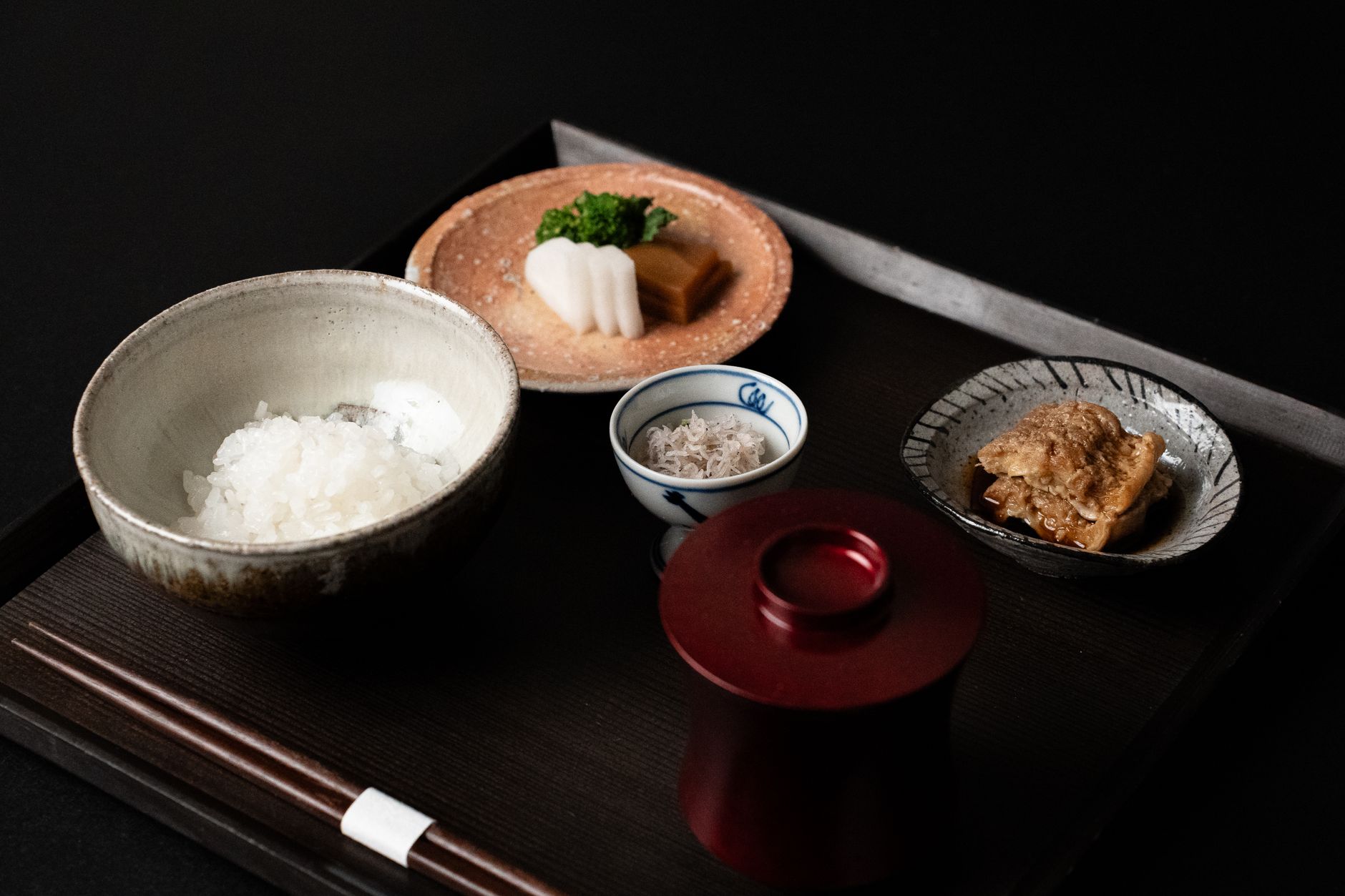
It sounds like a menu term. In practice it works more like a frame. Once you know the count, you start noticing it on trays, in home kitchens, and tucked into cookbooks.
The Characters
Ichiju sansai is the Japanese phrase for a set meal of one soup and three small dishes. The four characters read in order as one, soup, three, dishes. It is a count before it is a recipe.
The word is not rare. It appears in food writing and on set menus. But the phrase only makes sense when you know what each part counts as. The characters do the counting.
What’s in the Count
The Soup
Miso soup is the everyday default, but the one-soup slot holds more than that. A clear osuimono (お吸い物) is light and often appears at more formal meals. A tonjiru (豚汁) is the winter workhorse, thick with pork, daikon, and carrot.
The dashi (出汁) base shifts with the cook and the season. Sometimes there is shellfish or a few slices of green onion. The same slot can hold very different bowls.
At breakfast, the soup might be simple miso with tofu and wakame. At dinner, it might carry clams or mushrooms. The slot is fixed. The contents are not.
The Three Dishes
One common structure divides the three dishes by role: a vegetable, a protein main, and a fermented or pickled item. A typical tray might hold blanched spinach with sesame, a small grilled fish, and a few pickles.
The vegetables are usually simmered or dressed rather than raw. A main of grilled fish or a small meat dish sits at the centre. The pickle is small but deliberate. It resets the palate between bites.
A lunch set might be a rolled omelette, spinach, and pickles. A dinner set might be mackerel, simmered pumpkin, and a small bowl of tsukemono (漬物). The roles stay constant. The ingredients rotate.
Rice Stays Separate
Rice sits outside the count. It gets its own bowl and never becomes one of the three. That quiet rule is easy to miss. Where I grew up, rice often acted like a side. Here it is the centre the numbered dishes orbit.
With the rice set apart, the soup and three dishes can stay small. None of them has to fill you on its own. That is the rice’s job.
The rice bowl is usually refillable at a teishoku (定食) place. The soup and the small dishes often are not. That small difference tells you what the meal is built around.
Where You Meet the Phrase
A teishoku set at a restaurant is the cleanest example. The tray arrives with rice, soup, a main, and two small sides. The menu may not print the term, but the shape is the same.
You see the count in a school lunch tray, where rice, soup, and sides sit in their own compartments. A ryokan breakfast often follows it too, with the details changing by season and region.
Cookbooks borrow the phrase as a chapter plan. Articles about healthy eating use it as shorthand for balance. You can meet the term without ever seeing it written on a menu.
It appears more in writing about Japanese food than in everyday kitchen talk. It is a frame people cite, not a phrase anyone shouts across the stove.
In a home kitchen, the shape appears more on weekends than on weeknights. A Sunday spread might have a proper soup, a grilled fish, and a couple of sides. The phrase is the pattern behind the table, even when no one says it.
When the Shape Gets Bigger
Formal meals stretch the same idea without breaking it. A honzen-ryōri (本膳料理) set may list two soups and seven dishes, or three soups and eleven dishes. The count grows. The structure—soup, rice, and small dishes arranged around them—does not.
I used to think the fancier the meal, the less it would have in common with a weekday tray. The opposite seems true. The same small-dish logic just gets longer.
The jump from three small dishes to eleven is not about more food per person. It is about serving more courses and more variety. The same principle applies, but the table grows wider.
A Shape, Not a Rule
One cooking teacher describes the method as having no strict rules, just balance. The phrase is descriptive. It names what a complete meal often looks like. It does not issue commands.
A Tuesday dinner in an Osaka apartment might be one pan, a bowl of rice, and whatever pickles are left. Nobody counts. The pattern is what you come back to when you want a fuller spread.
The balance is the part that does real work. A main gives protein. A vegetable gives fiber. A pickle adds something sharp or salty. Some pickles ferment in salt or bran, and some are just vegetables left in vinegar. The soup and rice round the meal out.
Plenty of people here cook simply most nights. Ichiju sansai is a compass, not a checklist. It points toward balance. It does not grade Tuesday.
Why the Count Holds
The phrase is useful because it turns a full meal into a single image. You know how many bowls to set out. You know what roles need filling. A beginner can hold the whole idea in one hand.
It also travels well. A restaurant menu, a hospital tray, a school lunch, and a home kitchen can all refer to the same structure without further explanation. The count is the common language.
What an American Notices
Where I grew up in the Midwest, a full plate usually meant meat, starch, and a vegetable. Ichiju sansai counts the same meal differently. The soup is part of the number. The rice is assumed, not counted. The table ends up with more small plates.
The soup-as-a-course is the hardest part for people from the United States to adjust to. A bowl of soup next to a meal is familiar. Soup as a formal part of the set, with its own position, is slightly different.
Frequently Asked Questions
Is ichiju sansai a strict rule for every meal?
No. It is a shape, not a requirement. Many home meals are simpler, especially on weeknights.
Does rice count as one of the three dishes?
No. Rice sits outside the count in its own bowl. The three dishes are the main and two sides.
What kind of soup is usually served?
Miso soup is the most common everyday choice. Clear soups and heavier pork soups also fit the same slot.
References
- Just One Cookbook — explains the basic set as rice plus soup plus main plus two sides, and lists soups like tonjiru and osuimono.
- MIWA’s Japanese Cooking — divides the three dishes into vegetable, protein, and fermented or pickled, and notes there are no strict rules, just balance.
- Taste of Japan (JETRO) — describes ichiju sansai as one soup and three small dishes, one main and two sides.
- Kobayashi Foods — lists formal honzen examples such as two soups seven dishes and three soups eleven dishes.