
The Panel You Meet First
The first time I used the toilet in my Osaka apartment, I stood at the wall panel for a while. It was my first Japanese toilet, and it wanted an answer I didn’t have. The buttons had small icons, not English labels. Two of them looked like fountains. One looked like a musical note. I guessed, and I guessed wrong.
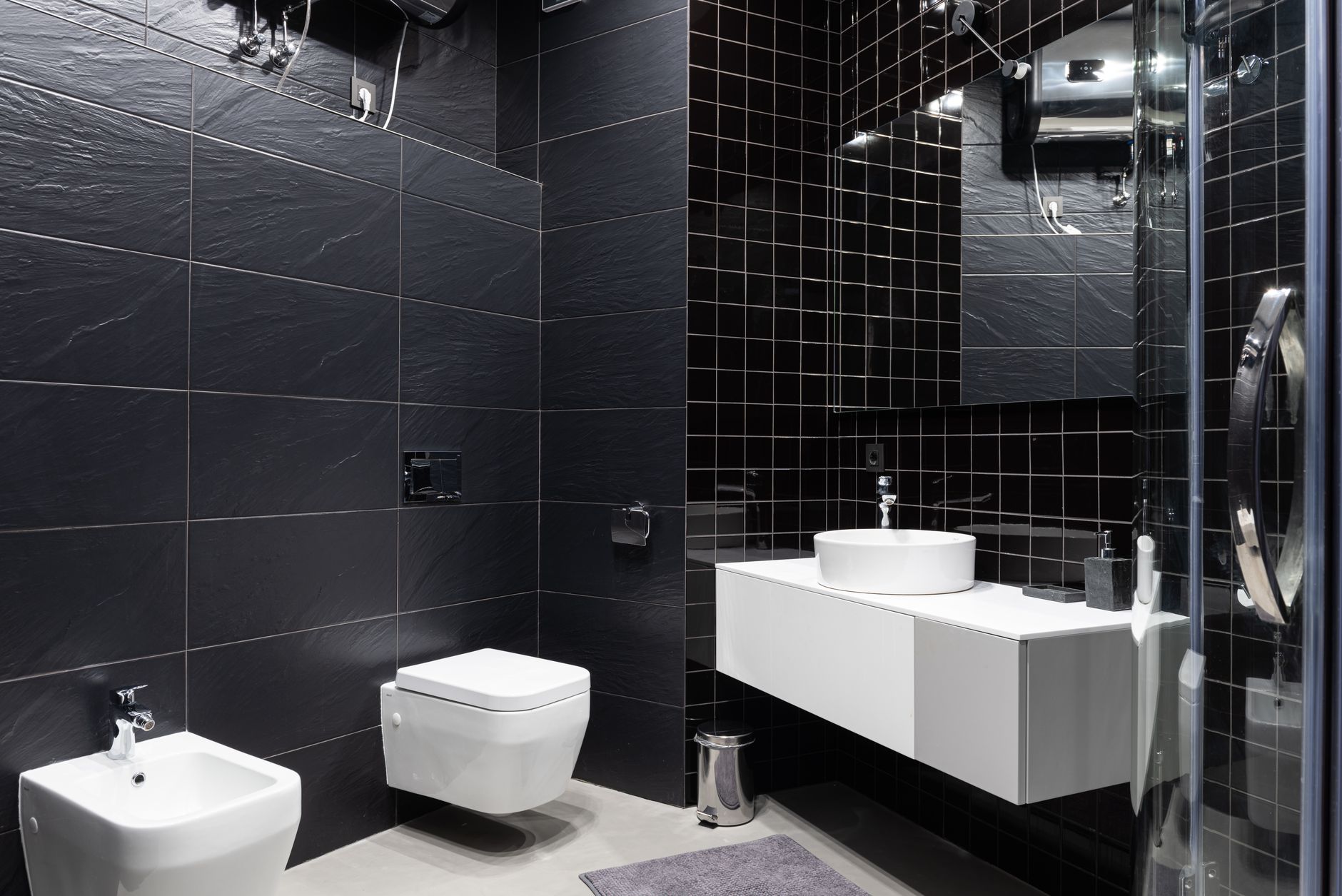
That panel controls a washlet (ウォシュレット), TOTO’s brand name for a bidet seat with a warm water spray, a heated seat, and usually a dryer. Around me in Osaka, people use the word loosely for any seat with those functions, even when the controls are another brand. I’ve stopped correcting myself.
The fixtures are a standard part of the plumbing in many of the ordinary homes I’ve seen. When I talk about them with friends back home, I usually start with the panel, because that is the first thing the visitors I’ve hosted meet.
What the Buttons Actually Do
The panel looks complicated, but on the models I’ve tried around Osaka, the same small set of functions keeps showing up. Once you know the handful, the rest is just water pressure.
- Rear wash — starts a warm spray aimed at the back. In the seats I have used, this is the default button I reached for first.
- Front wash — a separate spray at a different angle. On the units I’ve used, the icon is usually a small figure with a second line, and the function exists because one angle does not do both jobs.
- Pressure and temperature — on the units I’ve had, these are two rockers or up-and-down arrows. One changes the force of the spray, the other changes the water. The maximum pressure is more than enough.
- Seat temperature — the control you notice on the first cold morning. On every washlet I’ve used, the seat warmer has a low, medium, and high setting. It warms to somewhere just below body temperature.
- Dryer — blows warm air after the spray. On the units I’ve used, it is slower than a towel and does not replace one.
- Stop — cuts the spray off. This is the button I looked for first, once I learned the hard way.
The brands I’ve used have different icons, but the logic is the same. A rear wash, a front wash, and a stop. If you can find those three, you can work out the rest from the arrows.
The washlet shares the house with the genkan, which has its own strict logic. The genkan handles what happens at the door. The washlet handles what happens in the toilet room.
The Golden Angle
I assumed the spray angle was something a designer eyeballed. It wasn’t. TOTO says it tested more than 300 employees to find the position, and settled on 43 degrees, which the company calls the Golden Angle. For front washing, it uses 53 degrees.
The 43-degree claim is specific. TOTO describes it as the most comfortable and precise angle for cleansing, and the angle that keeps water and matter from splashing back on the wand. That’s not a sentence I expected to read about a toilet seat, but it explains why the washlet feels less messy than the high-pressure hose I’d imagined.
Where the Washlet Came From
The washlet did not start as a luxury toy. TOTO’s own history traces the idea to a bidet seat called the Wash Air Seat, imported by a Japanese trading company in the early 1960s and aimed at hospital patients and older adults with limited mobility.
In 1967, that trading company acquired the patent and exclusive rights and asked TOTO to become the domestic manufacturer. TOTO’s first Washlet bidet seat, Model G, went on sale in 1980. By 1987, a million Washlet units had sold. TOTO introduced the Washlet SIII in the U.S. in 1989.
The controls I saw on my apartment wall owe their existence to an engineering choice. TOTO designed an integrated circuit board to electronically control the water heater, the heated seat, the air dryer, and the wand position. TOTO’s development history also describes an integrated circuit board for controlling functions such as water heating, the heated seat, the dryer, and wand movement. Electronic control helped bring these functions together in one product.
Where You Meet Them
My first washlet was in a hotel near the airport, not in my apartment. The panel had more buttons than the one I have now, but most of them were variations of the same few. After that, I started noticing them in other places around Osaka.
In the apartments I’ve rented, the washlet is treated as standard plumbing rather than an upgrade. The department stores I go to tend to have them in the larger restrooms, often with a simpler panel that hides the pressure and temperature settings behind one button. Train stations near me are less consistent: some have a washlet in every stall, and some have one at the end of the row.
In the public restrooms I’ve used around Osaka, the washlet usually carries the same rear and front wash, but the dryer is less common. In the stations I pass through, the seat warmer is sometimes off in summer, which took me a while to notice because I was not looking for it.
I had already learned how the entryway works before I gave the washlet a second thought. The washlet is about as ordinary here as a sliding partition is in the homes that still have them.
What It Replaces
Where I grew up, a toilet was a toilet. You sat, you wiped, you flushed. A heated seat and a warm water spray were spa equipment or a medical device, not something you met in a friend’s apartment.
That’s why the first encounter feels like a test. The washlet is not asking you to learn a new culture. It is asking you to accept that toilet paper can be the backup rather than the main event. Once I made that mental shift, the buttons stopped looking like a keypad and started looking like a faucet.
It’s the sort of thing that stops being a novelty within a week. The only time I think about the washlet now is when a guest spends a long time in the bathroom.
References
- TOTO USA, “TOTO’s Declaration of Innovation: The Little-Known History of Washlet Bidet Seats Development” — used for the early Wash Air Seat, the 1967 acquisition, the Golden Angle, and the integrated circuit board.
- TOTO USA, “10 Little-Known Facts About Washlet Bidet Seats” — used for the 1980 Model G launch, the 1987 sales figure, and the 1989 U.S. introduction.