
The Machine on the Corner
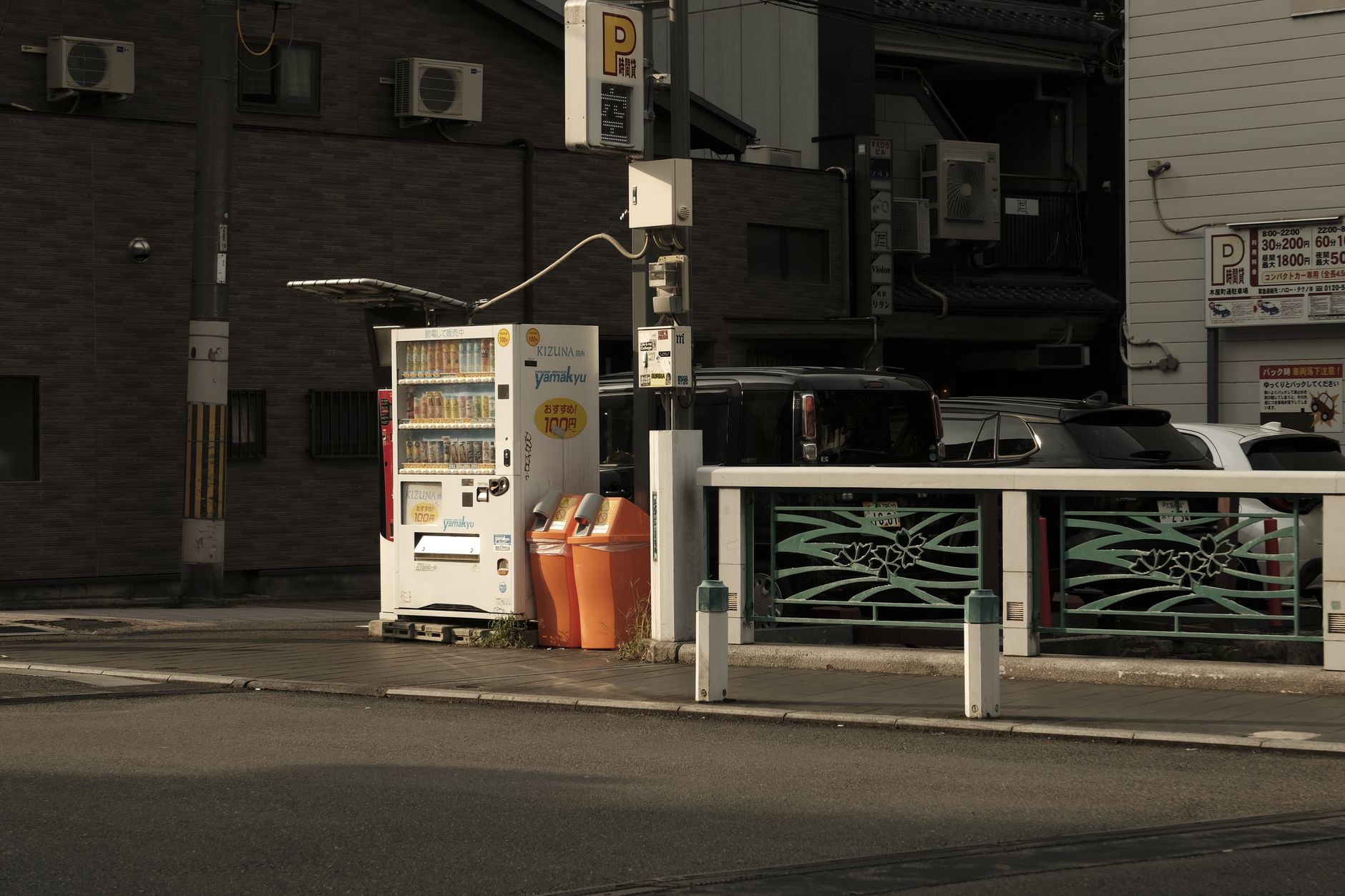
The Japanese vending machines outside the station have been there longer than I have. Around here, most people seem not to notice them until one is empty. Then the little red light above the coin slot turns it into a small, glowing disappointment.
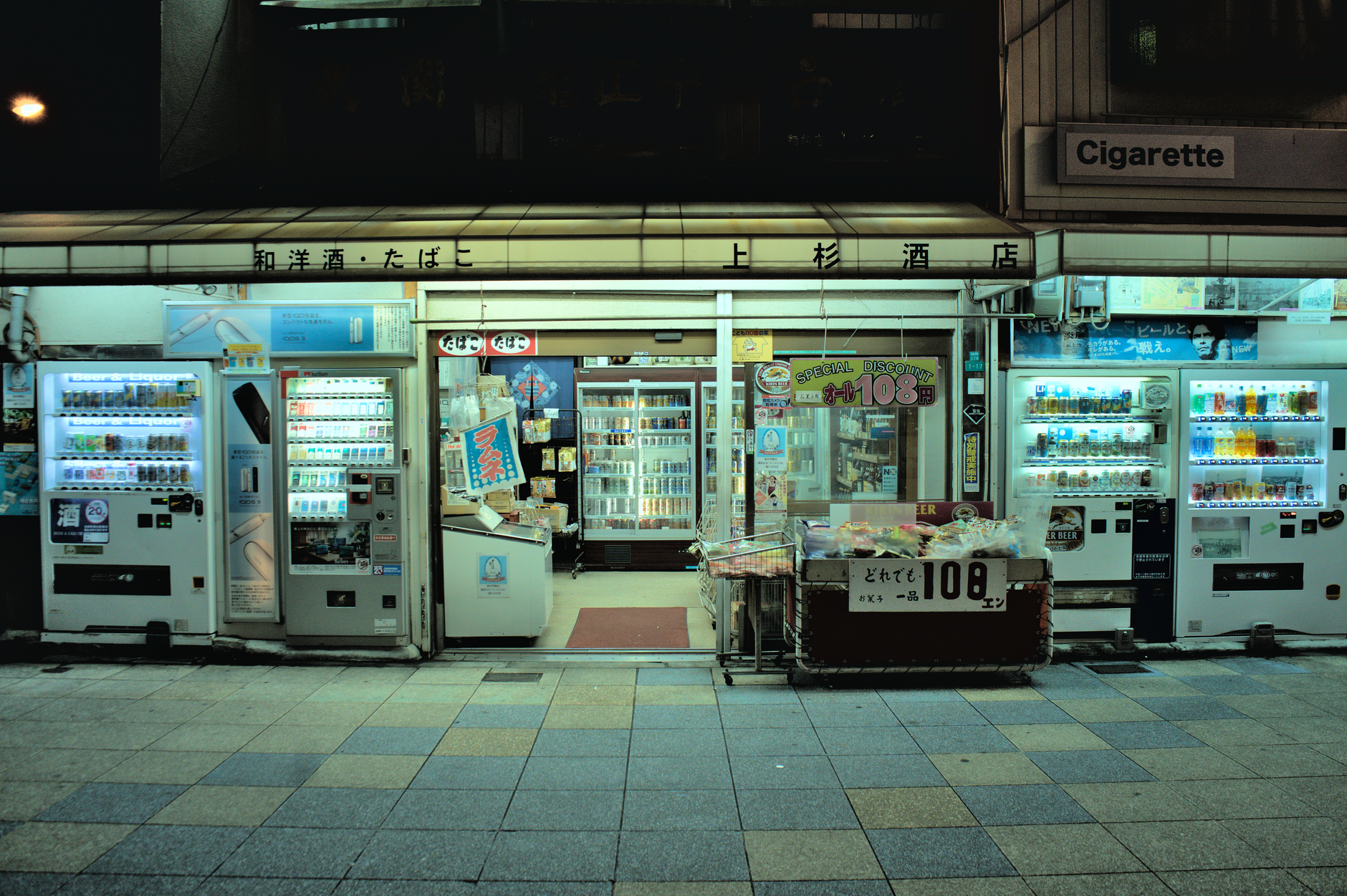
In Japanese, it is a jihanki (自動販売機), which means “automatic selling machine.” The word is descriptive, not affectionate. Around here, nobody calls it a wonder. It is simply part of the street, like a postbox or a guardrail.
The name does not dress anything up. It sells automatically. That is the whole promise, and the machine keeps it. Nothing in the word hints at why there are so many of them. Nothing explains why they end up where they do, either.
Where They Actually Live
In Osaka, I see vending machines on residential streets, outside temples, at station platforms, and beside parking lots that do not especially need one. The machine often stands a few doors from a konbini, and neither one seems to take business from the other. Friends who hike tell me they appear halfway up trails, and in more rural areas they sit at the edge of rice fields.
From what I have seen, a machine tends to appear wherever enough people pass by to empty it in a day or two. A quiet corner may still get one if the delivery route already runs past it. The placement is not romantic. It is about not letting stock go flat.
Some streets near me have three machines within sight. One street over may have none. The difference usually comes down to foot traffic and whether a route already passes, not to any grand plan.
The Purchase Itself
Using one is so quick that the transaction is the least interesting part. As of 2026, most of the machines I use in Osaka take an IC card or a phone tap. Cash still works. The machine whirs, a bottle drops into the tray, and you are already a few steps down the street.
On my commute, people use a jihanki the way people back in my hometown use a drive-through, but without the car. It is a fifteen-second stop, not an errand. Nobody gathers around the machine. You arrive, press a button, and keep moving.
The same corner sometimes has a konbini, and the machine still keeps its customers. The two serve slightly different needs. The konbini asks you to walk inside, choose, and stand in line. The machine asks for nothing but exact change or a tap.
There is usually a small tray for coins and a slot for notes. Some machines still refuse a wrinkled bill. That little pause is part of the rhythm now. You smooth the note, try again, and get your drink.
Hot and Cold, Depending on the Month
In winter, the same machine on my corner starts selling warm cans. The button glows red under a little label, and the drink comes out too hot to hold for long. Around here, that shift happens sometime in November or December. It is one of the few times anyone notices the machine at all.
It is a seasonal marker more than a service. You stop wearing a jacket; the machine starts selling cold drinks with condensation on the can. On my corner, nobody announces it. The lineup simply changes, and one morning you reach for a familiar tea and it is warm.
The hot selection is not just coffee. Corn soup shows up next to the tea. I remember thinking that was strange until I tried it on a cold platform and understood.
What Else a Machine Can Sell
Most of the machines near me sell drinks — tea, coffee, water, soda. A few near the station sell ice cream, and I have seen machines for cigarettes, eggs, and even flowers in other neighborhoods. The cigarette ones ask for an age-verification card before the machine will take your money.
What I have not seen much of, at least in my part of Osaka, is the kind of machine that sells electronics or hot food. The dense, colorful machines are mostly a drinks-and-ice-cream business. But the principle is the same: a small space, a machine, and no staff.
Why They Persist
The practical reason seems to be labor. A machine can sell a bottle of cold tea at three in the morning without a person standing behind it. For a heavily used corner, that is cheaper than opening a stall. It also never asks for a shift change.
What surprised me is how much of the system is still people. A route driver comes by, unlocks the machine, checks dates, fills the gaps, and clears the coin box. Around me, empty machines get restocked quickly. The machine does the selling; the route does the work.
A konbini on the same corner has to staff a register all night. A vending machine does not. That difference alone probably explains a lot of the density, at least in busy parts of Osaka.
The economics are not invisible. The machine costs money to run, restock, and repair. But it is still a smaller commitment than a storefront. That is the whole argument in its favor.
The Late-Night Streetlight
On my walk home after the last train, the vending machines are still lit. A street near me can feel empty except for one glowing box of drinks. It is not the same as a shop being open; it is closer to a lamp that happens to sell tea.
I do not know if the light is left on for safety or for advertising. Probably both. In my neighborhood, it gives a little bit of visibility at corners where there is no open store. That is a practical effect, even if it was never the main point.
A Different Kind of Convenience
The comparison with home used to feel obvious to me: in my hometown, you get a drink at a gas station or a drive-through. There, the convenience is hidden inside a building or behind a windshield. In Osaka, it sits on the sidewalk and faces the street. The comparison tells me what my hometown and Osaka do with convenience: one hides it inside, the other puts it on the sidewalk.
The same split shows up in the konbini near me. The store I knew back home was a last resort for a soda or a candy bar. The one near my apartment works differently because the expectations are different. On my commute, the vending machine is often the first choice for a quick drink, not the fallback.
I would not call the vending machine a hidden gem. It is too ordinary for that. But that ordinariness is the point. In the places I know, it has become part of the rhythm of a street — not a destination, just a place to grab something and go.