
The table in our apartment comes up to about my knees. The first few nights, I kept looking for a chair. Then I worked out that you do not pull up to it—you fold your legs and sit down to meet it.
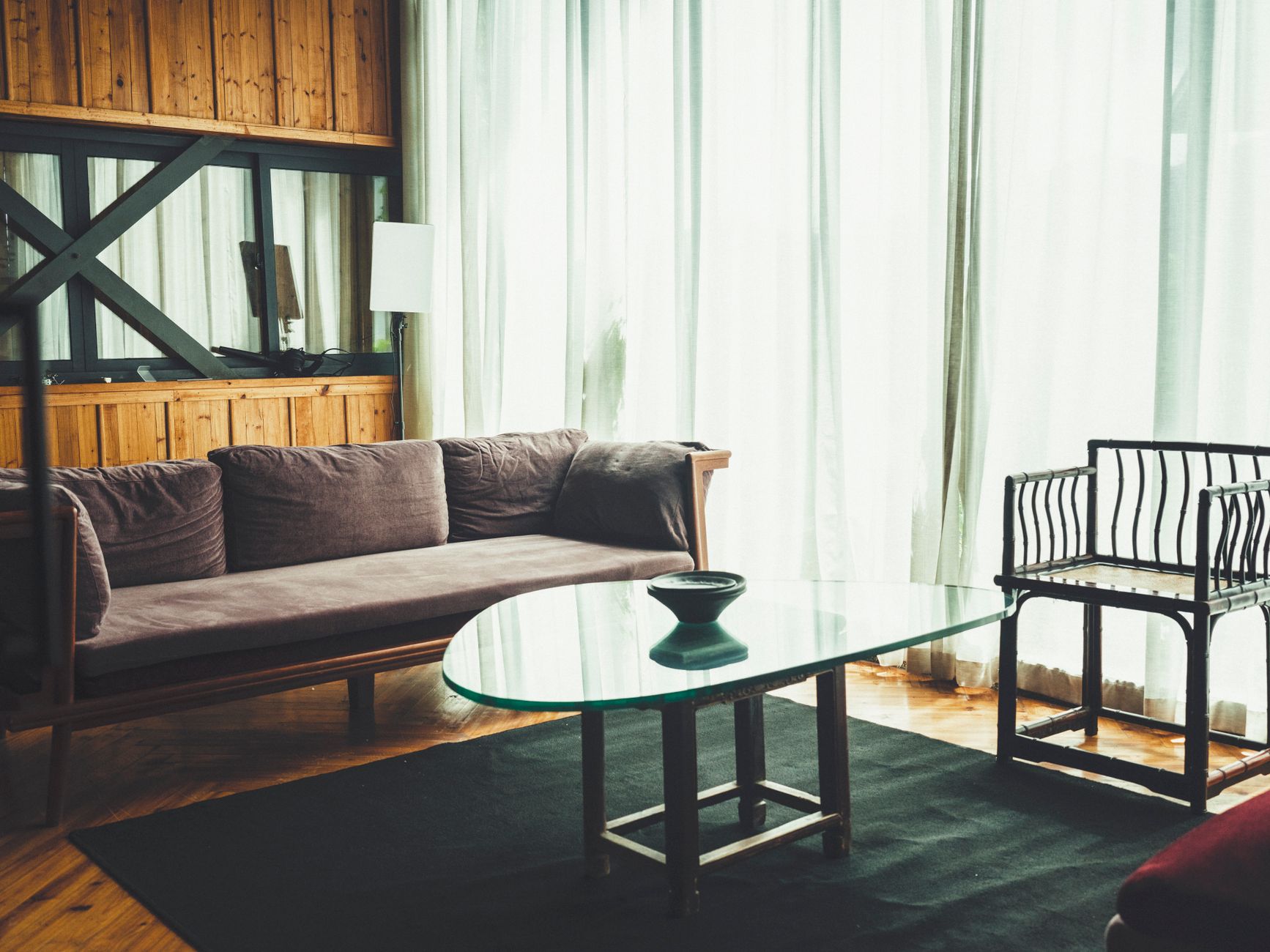
When I walk in from the entryway, the table is often the first thing I see from the main room. It sits in the middle of an empty floor, like an invitation to sit.
This is the low table, and it is the center of a room that has no fixed job. In an ordinary Japanese home, the same space can be the dining room at six, the living room at eight, and the bedroom by eleven.
The Low Table You Actually Meet
A chabudai (ちゃぶ台) is a short-legged table used in traditional Japanese homes. The original models ranged from 15 to 30 centimeters in height. That is roughly six to twelve inches—low enough that the floor itself becomes part of the furniture.
People seated at a chabudai may sit on zabuton (座布団), flat cushions, or directly on tatami mats, rather than on chairs. In our place, two zabuton sit by the low table, and a stack of them leans against the wall for guests. Chairs never enter the room.
How People Sit (and Why Seiza Isn’t the Whole Story)
There is a myth that everyone sits perfectly in seiza (正座). That is the kneeling posture with the tops of the feet on the floor. Seiza is one formal floor-sitting posture. But everyday family life has always included less formal positions, like sitting cross-legged.
I can manage seiza for about ten minutes. At home, nobody bothers with it. My girlfriend shifts between cross-legged and one knee up. The low table does not care how you sit, as long as you are down at its level.
The Table Folds, the Room Doesn’t
Here is the part that took me a while. The four legs of a chabudai are generally collapsible. You pop them inward, lift the top, and the table becomes a flat panel that slides into a narrow gap next to the closet.
Rooms here were often used for eating, sitting, receiving guests, and sleeping at different times of day. A low table that could be folded and put away fit that flexibility. In our apartment, dinner is at the table. Afterward it folds, and the floor is clear for everyone to spread out.
The room changes around it. The shoji and fusuma partitions stay open during dinner and close off a corner later. The same square meters become a different room without moving a wall.
The Cushions Do the Work Chairs Would Do
Zabuton are flat cushions, bigger than a seat pad and smaller than a pillow. They soften the line between sitting and lying down. By the end of an evening, half the cushions in our apartment are being used as armrests, back support, or a low table for a phone.
At first I missed a backrest. A chair holds you at one height for as long as you want. Cushions do not. You shift, stretch, kneel, lean on the wall, and eventually stand up.
The angle feels strange until it doesn’t. A low table changes where your knees, elbows, and plates land. After a few months, a normal-height dining chair started to feel like church furniture to me.
Guests from back home sometimes want to try it. They lower themselves to a zabuton, keep a chair imaginary for the first ten minutes, then give up and let their legs do whatever feels natural. That is the moment the room starts making sense to them.
Winter Swaps the Table
In winter, the chabudai is often replaced by a kotatsu (炬燵). That is another short-legged table with a removable top and a heater underneath. You put a blanket over it and slide your legs under the frame.
I resisted the kotatsu for two winters because I thought it was a device for people who couldn’t handle cold. Now I understand: it is the warmest small room you can build in an uninsulated apartment. The table becomes a tent, and everyone sits at it until bedtime.
There is a version of the kotatsu in a lot of older apartments around me, but not every home has one. In our place it only appears when the weather turns, then disappears back into the closet in spring. The low table comes back out and the cycle starts again.
Where the Low Table Sits in a Modern Home
In our apartment, the low table sits in the middle of the main room, not against a wall. It does not anchor a “Japanese-style room”; it anchors the one room we actually use. The kitchen is visible from it, and so is the television.
There is a small stack of zabuton near the closet. During dinner, two come out. Afterward, they get tossed back, sometimes with a phone or a folded blanket on top. There is no ritual to any of it.
Back home, I grew up with a dining table that never moved. It defined the room. Here the room defines itself each time you fold the table and pick up the cushions. The difference is not in the furniture—it’s in the plan.
Where the Arrangement Comes From
The history is not as ancient as I assumed. Where the zen (膳) actually came from is something I’ve never found a straight answer to. What stayed with me is the shape: a small, short-legged table holding one person’s dishes. A person could move their zen and eat wherever they preferred.
The zen is the detail I did not expect. It was closer to a TV tray than a shared dinner table. Each person had their own small table, and dinner could happen in different corners of the same room.
I had pictured a single shared low table as the old way. In that earlier setup, dinner could be a one-person tray moved across the room. The shared chabudai feels closer to the way a family table works back home, just much lower.
Why did the table stay low? The sources I used do not try to settle that. What is documented is the room’s old pattern: spaces were multifunctional, and a low, collapsible table fitted that. Anything beyond that is a guess, so I will leave it there.
That is the arrangement in the places I have lived and visited. It is not universal. Some homes have western-style chairs and high tables, and a few have both in different rooms. The low table is one ordinary option, not a law.
What the Room Becomes at Night
At the end of dinner, the table folds, the cushions stack, and the same square of floor becomes a bed. This is the part that still surprises friends back home: there is no switch, no moving wall. The room simply stops being a dining room and starts being a bedroom.
A Western bedroom has a bed as its fixed point. Here the bed is the last thing to appear, not the first. It comes out of the closet as a futon, goes on the same floor where the table was, and disappears again in the morning.
In our apartment, the genkan is the only place with a clear boundary. The rest of the home is a set of surfaces that trade jobs. The low table is the only piece that has to move out of the way for the last job of the day.
The table is folded now, pushed against the wall. In a few hours, someone will lay it flat and set two plates on it. Then it will fold again. Nobody will call it a dining table or a coffee table. It is just the table.
References
- Wikipedia — “Chabudai”: definition, original heights, seating on zabuton or tatami, collapsible legs, and replacement by kotatsu in winter.
- Suwada1926 — “Japanese Chabudai Low Dining Table Guide”: multifunctional room use and the range of floor-sitting postures including seiza and cross-legged sitting.